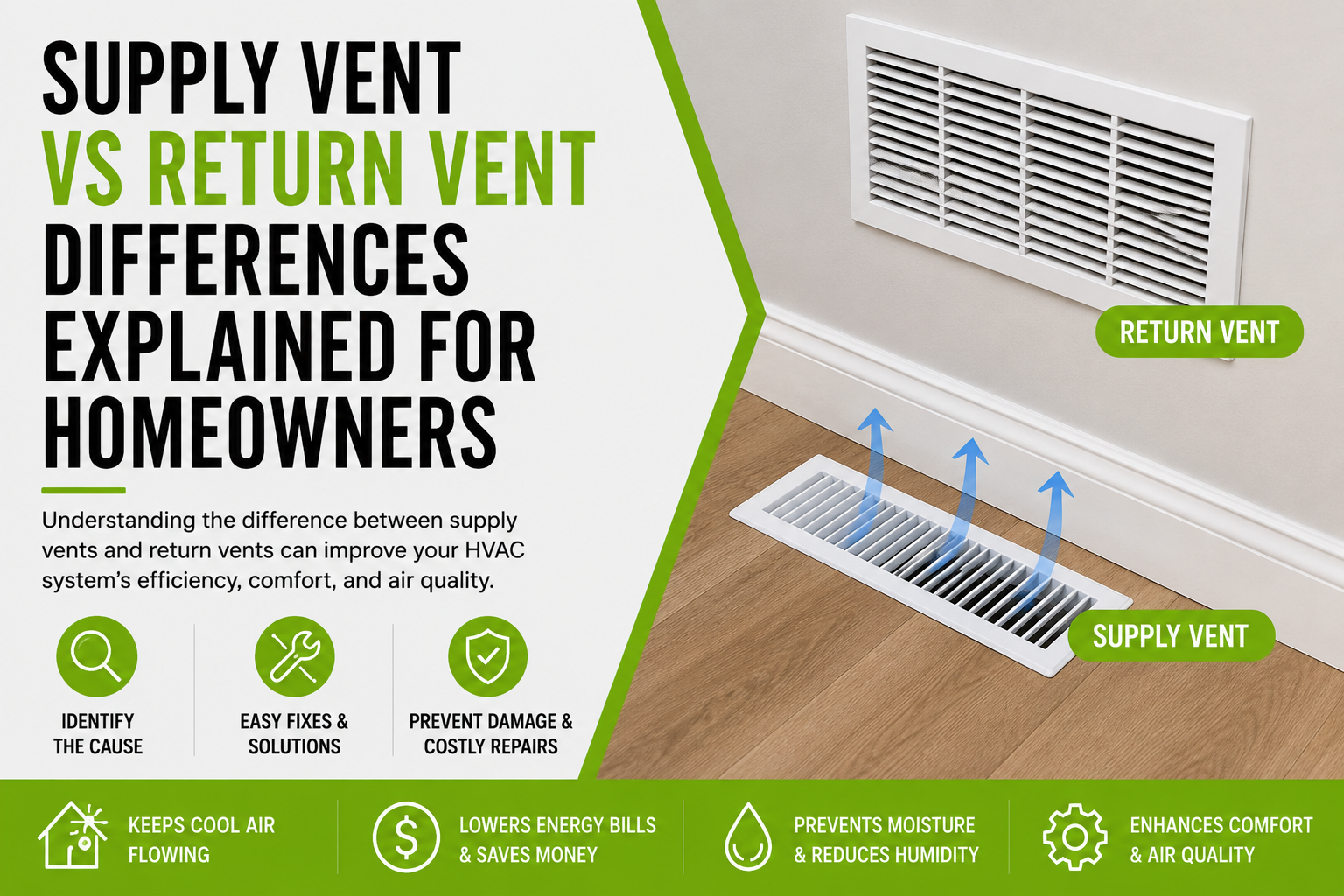

Understanding supply vent vs return vent differences is essential for maintaining comfort, energy efficiency, and healthy indoor air quality. Many homeowners notice uneven temperatures, weak airflow, or rising utility bills without realizing the issue may be related to the balance between return and supply airflow. A properly functioning HVAC system relies on both vent types working together to circulate conditioned air throughout the home. Environmental factors can also affect airflow performance, which is why understanding how weather impacts duct systems is important. Learn more about HVAC airflow and how seasonal conditions influence duct performance.
Although many people use the terms interchangeably, there are important distinctions between supply vent vs return vent components. Knowing these differences can help homeowners identify airflow problems, improve system efficiency, and determine when professional duct inspection or repair is necessary.
Why Supply Vent vs Return Vent Differences Matter
The relationship between supply and return HVAC airflow directly impacts how efficiently your heating and cooling system operates. Supply vents deliver conditioned air into living spaces, while return vents pull indoor air back into the HVAC unit for reconditioning. If either side becomes restricted, airflow balance suffers, reducing comfort and increasing energy consumption.
When homeowners misunderstand hvac return vs supply airflow, they may accidentally block vents with furniture, close registers, or overlook dirty ductwork. These issues can create pressure imbalances that force HVAC equipment to work harder. Over time, this increases wear on system components and can shorten equipment lifespan.
Poor airflow balance may also contribute to indoor air quality concerns. Dust, allergens, and contaminants can accumulate in ductwork and circulate throughout the home. Homeowners concerned about airflow quality should understand the warning signs of dirty ducts and address problems early.
What Is a Return Vent and How Does It Work?
Many homeowners ask, what is a return vent? A return vent is the opening that pulls indoor air back into the HVAC system. Unlike supply vents that push conditioned air into rooms, return vents act as the system’s intake pathway. The air travels through return ducts, passes through filtration components, and is conditioned again before being redistributed.
Return vents are typically larger than supply vents and often do not have adjustable louvers. Their primary purpose is to maintain proper airflow circulation. Without adequate return airflow, conditioned air cannot move efficiently throughout the home, creating hot and cold spots and reducing system performance.
Common Return Vent Locations
Most homes have return vents located in hallways, central living areas, ceilings, or large walls. These locations help collect air from multiple rooms. Understanding return vent placement helps homeowners recognize airflow restrictions and identify potential circulation problems before they become costly HVAC repairs.
Main Differences Between Supply Vent and Return Vent
When comparing supply vs return vents, the easiest distinction is airflow direction. Supply vents distribute heated or cooled air into rooms, while return vents pull air back to the HVAC unit. Both are equally important because one cannot function effectively without the other.
Another important difference involves airflow pressure. Supply vents operate under positive pressure because conditioned air is being pushed outward. Return vents operate under negative pressure because they draw air inward. This pressure relationship keeps air moving continuously throughout the home.
FeatureSupply VentReturn Vent
| Primary Function | Delivers conditioned air | Returns indoor air to HVAC system |
|---|---|---|
| Airflow Direction | Outward into rooms | Inward toward HVAC unit |
| Pressure Type | Positive pressure | Negative pressure |
| Typical Size | Smaller | Larger |
| Adjustable Louvers | Usually yes | Usually no |
| Main Purpose | Comfort distribution | Air circulation |
How to Identify Supply and Return Ducts
Homeowners frequently wonder how to identify supply and return ducts without professional assistance. One simple method involves turning on the HVAC system and placing your hand near the vent opening. If air is blowing outward, it is a supply vent. If air is being pulled inward, it is a return vent.
You can also examine vent size and construction. Return vents are generally larger and may have wider grilles. Supply vents often include adjustable dampers that allow homeowners to direct airflow. Understanding supply duct layouts and return pathways helps homeowners communicate more effectively when scheduling HVAC inspections.
- Supply vents blow air into rooms.
- Return vents pull air back into the system.
- Supply vents are often smaller.
- Return vents are commonly located in central areas.
- Supply registers frequently have adjustable louvers.
Fast Solutions for Common Airflow Problems
Several airflow issues related to supply vs return air can be addressed quickly. Start by checking whether furniture, curtains, rugs, or decorative items are blocking vents. Even partial obstruction can significantly reduce airflow efficiency throughout the home.
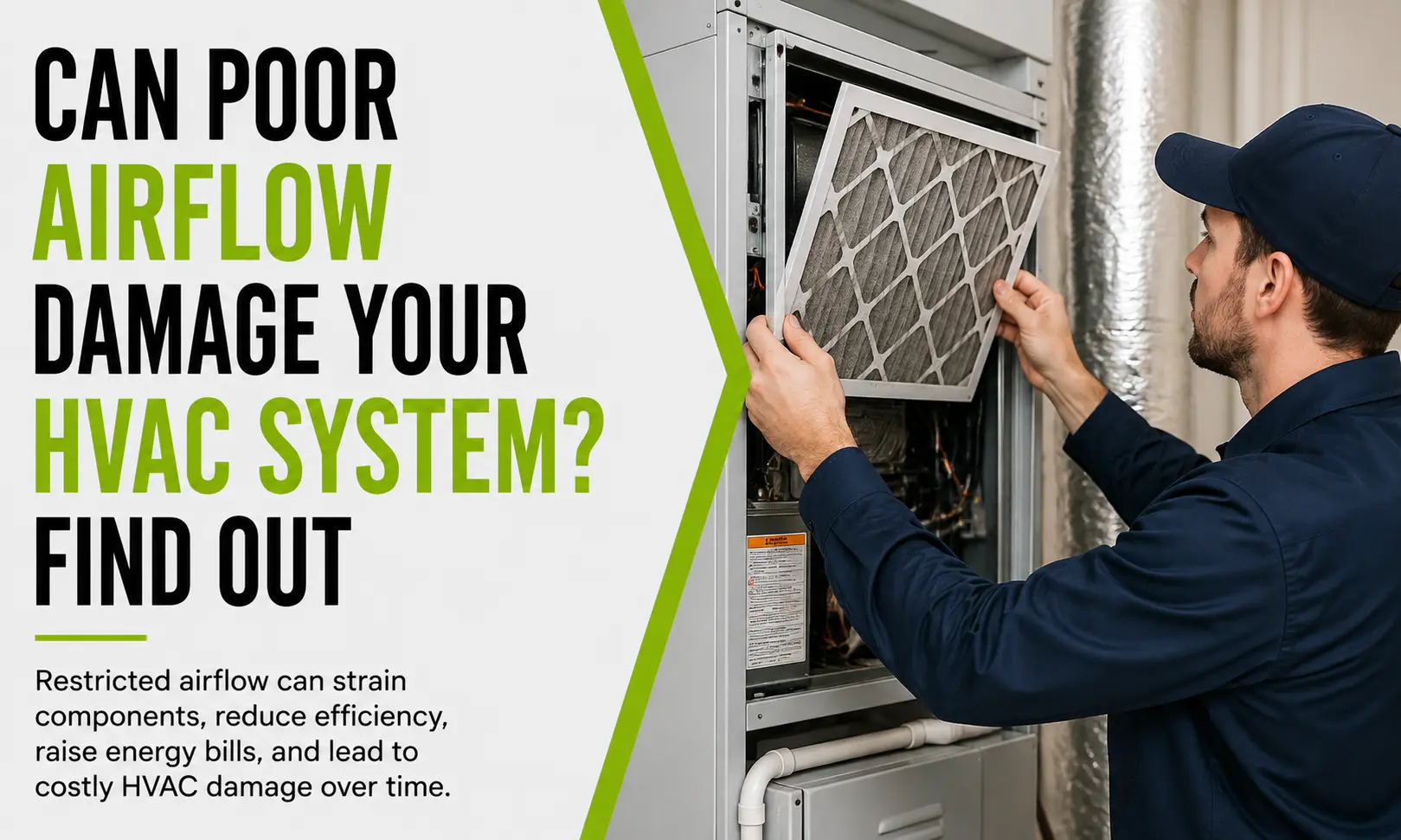
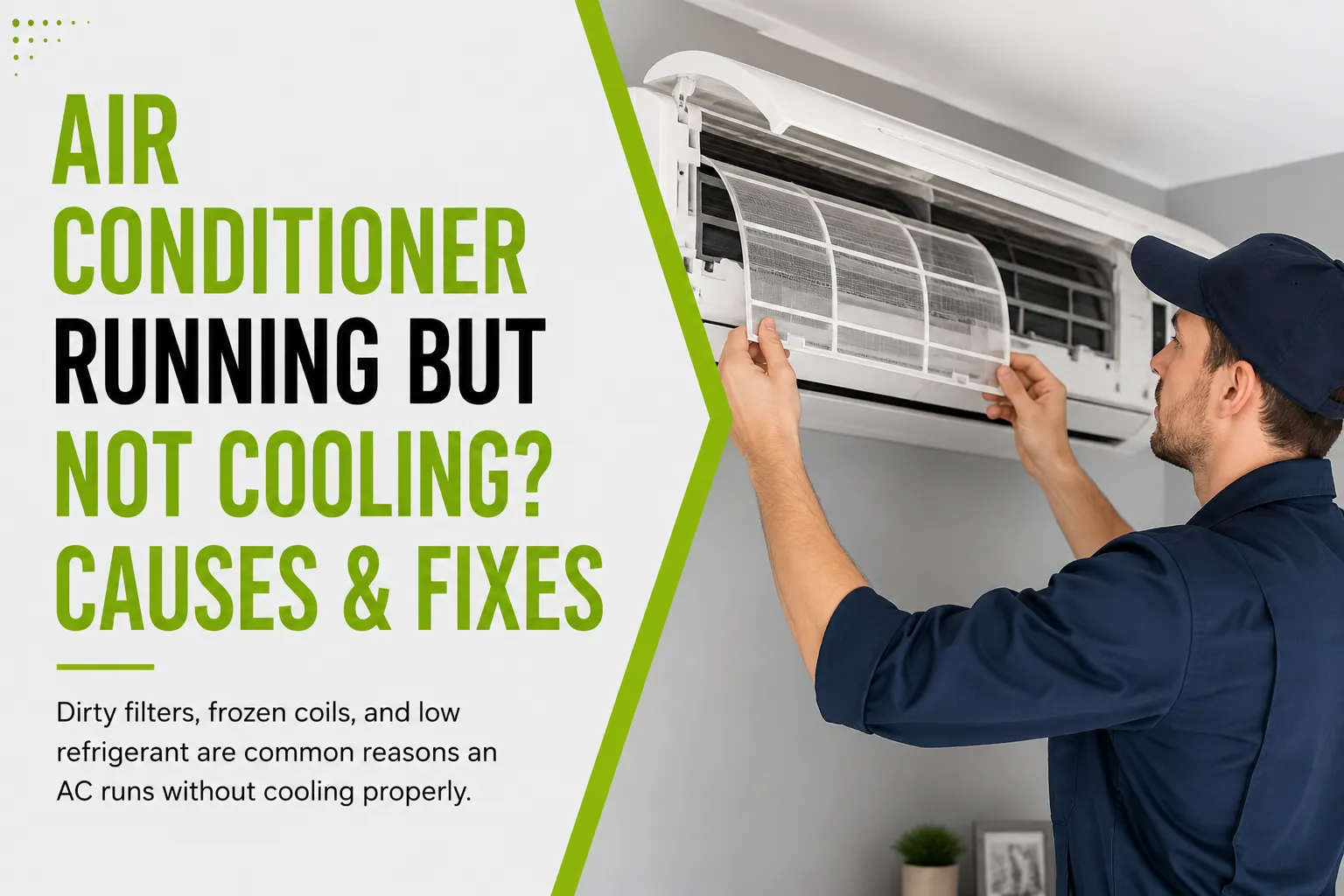
Replacing dirty air filters is another simple but highly effective solution. Clogged filters restrict airflow and force the HVAC system to work harder. Homeowners experiencing weak airflow should also inspect visible vent openings for dust buildup and debris accumulation.
- Replace HVAC filters regularly.
- Keep vents unobstructed.
- Vacuum vent grilles periodically.
- Check for closed registers.
- Schedule airflow inspections when problems persist.
System and Home Improvement Solutions
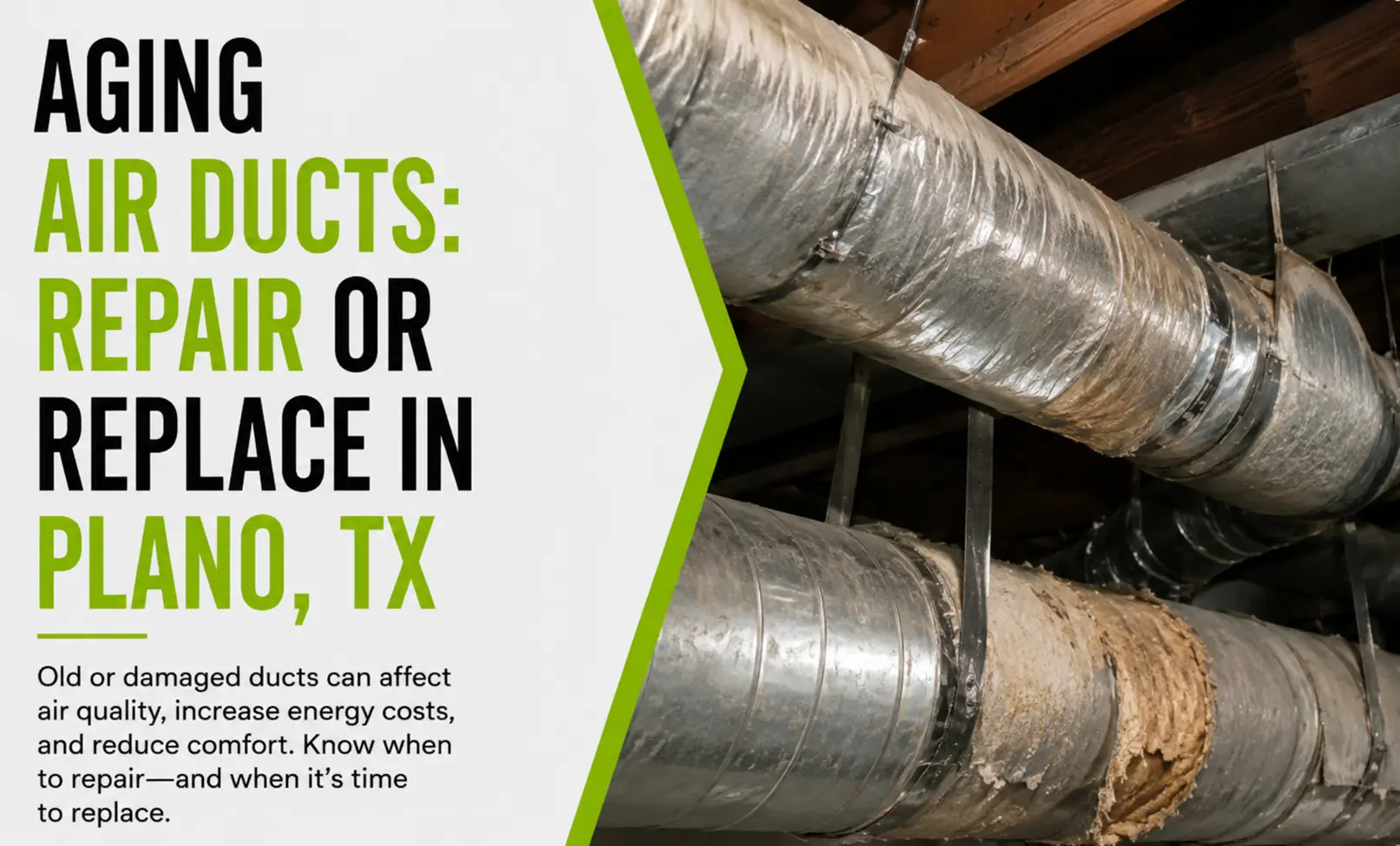
Some airflow problems require larger improvements beyond basic maintenance. Aging duct systems may develop leaks, disconnected sections, or crushed duct runs that reduce airflow performance. In these situations, professional duct inspection becomes necessary to identify hidden restrictions and pressure losses.
Homeowners considering long-term efficiency improvements should evaluate overall duct condition. In some cases, damaged ductwork may require repair or replacement. If your home experiences chronic airflow imbalance, reviewing options for duct repair can help restore proper HVAC performance and comfort.
Additional solutions may include zoning systems, airflow balancing, insulation upgrades, or duct redesign. These improvements help ensure every room receives adequate conditioned air while maintaining proper return airflow throughout the house.
DIY vs Professional Comparison
DIY maintenance works well for simple tasks such as changing filters, cleaning accessible vent covers, and checking for obvious obstructions. These steps can improve airflow and help homeowners better understand their return and supply system operation.
However, many HVAC airflow issues occur inside hidden ductwork where homeowners cannot easily inspect conditions. Air leaks, static pressure problems, mold growth, damaged insulation, and disconnected ducts often require specialized diagnostic equipment and professional expertise.
TaskDIYProfessional Service
| Replace air filter | Yes | Optional |
|---|---|---|
| Clean vent covers | Yes | Optional |
| Inspect hidden ducts | No | Yes |
| Airflow balancing | Limited | Yes |
| Duct leak repair | Limited | Yes |
| Static pressure testing | No | Yes |
Signs Professional Service Is Needed
If your HVAC system struggles to maintain consistent temperatures, professional evaluation is recommended. Uneven room temperatures often indicate airflow restrictions, duct leakage, or imbalanced supply and return HVAC performance that requires expert diagnosis.
Other warning signs include excessive dust, unusual odors, weak airflow, higher utility bills, and frequent HVAC cycling. Homeowners experiencing these symptoms should consider scheduling an inspection. Learn more about common airflow contamination concerns by reviewing information about air duct symptoms and potential health risks.
- Hot and cold spots throughout the house.
- Weak airflow from supply vents.
- High energy bills.
- Excessive indoor dust.
- Persistent HVAC performance issues.
Why Choose Professional HVAC and Duct Services?
Professional technicians use specialized equipment to evaluate airflow, static pressure, duct integrity, and overall system performance. This level of inspection identifies hidden problems that homeowners often cannot detect through visual observation alone.
Air n Fires provides comprehensive duct inspections, airflow diagnostics, cleaning, repair, and maintenance solutions designed to improve comfort, efficiency, and indoor air quality. Their technicians understand how proper balance between supply and return airflow affects HVAC performance and long-term equipment reliability.
For homeowners seeking cleaner indoor air, understanding the connection between airflow and contamination is important. Resources discussing air quality can help explain why professional evaluations often provide significant long-term benefits.
According to the U.S. Environmental Protection Agency, proper HVAC maintenance plays an important role in indoor air quality management. Additional information is available through EPA Indoor Air Quality. Research from Energy Education and educational HVAC guidance from University of Minnesota Extension also support the importance of proper airflow management.
FAQs About Supply and Return HVAC Systems
What is the difference between a supply vent vs return vent?
A supply vent delivers heated or cooled air into a room, while a return vent pulls indoor air back to the HVAC system. Both work together to maintain airflow circulation and overall comfort throughout the home.
What is a return vent and why is it important?
A return vent collects indoor air and sends it back to the HVAC unit for filtering and conditioning. Without adequate return airflow, the system cannot efficiently distribute conditioned air throughout the house.
How can I identify supply and return ducts?
To understand how to identify supply and return ducts, check airflow direction. Supply vents push air outward, while return vents pull air inward. Return vents are usually larger and located in central areas.
Can I close return vents to improve airflow?
No. Closing return vents can disrupt airflow balance and increase system pressure. This often reduces HVAC efficiency and may contribute to equipment strain or uneven temperatures throughout the home.
Why is my supply duct airflow weak?
Weak airflow may result from dirty filters, blocked vents, duct leaks, airflow restrictions, or HVAC equipment issues. Professional inspection can identify the exact cause and recommend appropriate solutions.
Which is more important, supply or return vents?
Neither is more important. Effective HVAC performance depends on balanced airflow between both systems. Proper coordination of return and supply airflow is necessary for comfort, efficiency, and equipment protection.
Can dirty ducts affect supply vs return air performance?
Yes. Dust accumulation, debris, and contamination can restrict airflow throughout the duct network. This can reduce system efficiency, impact indoor air quality, and create uneven heating or cooling.
Schedule an HVAC Airflow Evaluation
If you are experiencing uneven temperatures, weak airflow, excessive dust, or rising energy costs, a professional HVAC and duct inspection can identify the root cause. Proper diagnosis helps prevent unnecessary repairs while improving comfort, efficiency, and indoor air quality. Scheduling an evaluation allows experts to assess both supply and return airflow and recommend the most effective solution for your home.
Conclusion
Understanding supply vent vs return vent differences helps homeowners make smarter decisions about HVAC maintenance, airflow management, and indoor comfort. While basic maintenance can resolve some airflow issues, persistent problems often require professional expertise to uncover hidden duct or system deficiencies. If you want reliable airflow diagnostics, duct inspections, and HVAC support, contact Air n Fires to schedule a professional evaluation and keep your system operating at peak performance.