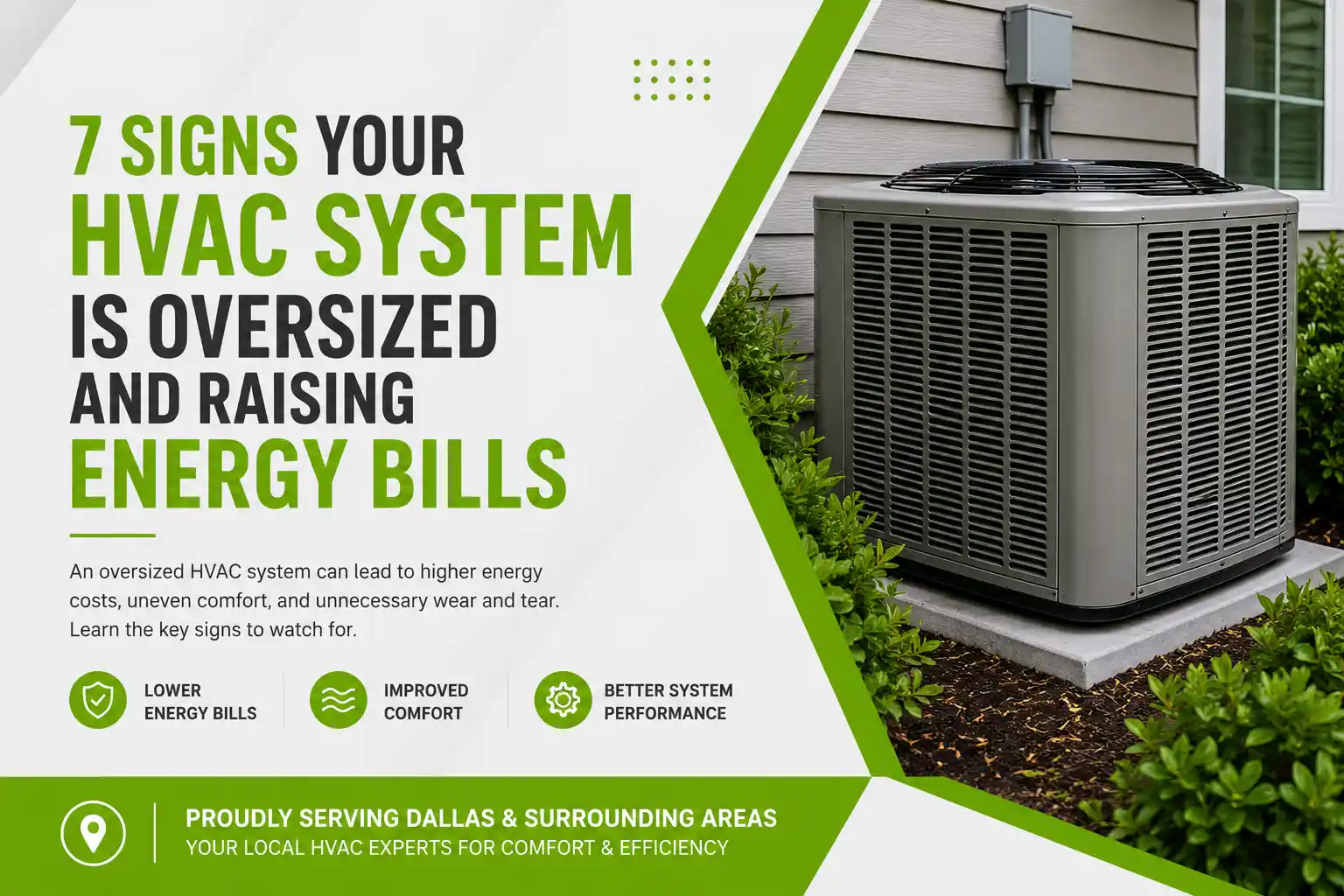

If you have noticed uneven temperatures, rising energy bills, or constant cycling from your ac unit, there is a good chance you are dealing with one of the most common signs your hvac system is oversized. Many homeowners assume a larger air conditioner will cool your home faster and better. In reality, an oversized air conditioner often creates comfort problems, poor indoor air quality, and expensive repair issues. A properly sized ac system should maintain steady temperatures while removing humidity efficiently throughout the day.
When an HVAC system is too big for your home, it struggles to complete balanced cooling cycles. This can lead to short cycling, inconsistent airflow, moisture buildup, and unnecessary wear on important parts like the evaporator coil. Homeowners often ignore these warning signs until the system starts failing early. Understanding how an oversized ac affects your home can help you avoid costly replacements and comfort issues. If your ducts also contribute to poor airflow, professional duct cleaning may improve system performance and air circulation.
1. Your AC System Turns On and Off Constantly
One of the clearest oversized ac unit symptoms is constant short cycling. An oversized unit cools the temperature too quickly, which causes the thermostat to shut the system down before it completes a full cooling cycle. While that may sound efficient, it actually increases mechanical strain on the compressor and electrical components. Frequent starts and stops use more electricity than a properly sized system that is designed to run long enough to stabilize comfort conditions inside the home.
Short cycling also prevents the system from balancing airflow and moisture levels throughout the house. This creates temperature swings and poor humidity control that leave many rooms uncomfortable. Homeowners often assume the thermostat is failing when the real issue is improper ac size. If you notice poor airflow or airflow restrictions, scheduling an air duct inspection can help identify whether your HVAC system is oversized or struggling with duct performance problems.
2. Your Home Feels Humid Even While the AC Is Running
An oversized air conditioning system will often leave your home feeling damp or sticky because it cannot properly manage humidity levels. Your HVAC system does more than lower air temperature. It also plays a major role in removing humidity from indoor spaces. Moisture removal happens when warm air passes across the cold evaporator coil long enough for condensation to form and drain away properly.
Since an oversized air conditioner cools rooms too quickly, it shuts off before enough moisture can be removed. As a result, you may feel cool but uncomfortable at the same time. Excess indoor moisture can also increase mold risks and worsen allergies. If your house constantly feels muggy during summer, reading about humidity problems can help you understand why improper system sizing affects overall comfort and indoor health.
3. Energy Bills Keep Increasing Without Explanation
Many homeowners believe a larger HVAC system saves money because it cools faster. The truth is that an oversized ac usually causes higher utility costs. Frequent startup cycles require large bursts of electricity, which increase monthly cooling expenses over time. A properly sized system maintains steady operation, while an oversized one wastes energy through repeated stops and starts that place additional stress on the entire air conditioning system.
High energy consumption can also happen when oversized equipment forces ducts to handle more airflow than they were designed for. This imbalance reduces efficiency and may create static pressure problems throughout the home. If your utility bills continue rising despite normal usage, a professional HVAC efficiency review may reveal hidden sizing problems. The HVAC audit process can help identify whether poor system sizing is increasing long term operating costs.
4. Some Rooms Feel Too Cold While Others Stay Warm
Uneven temperatures are another major sign that your HVAC system may be too large for your home. An oversized unit often blasts cold air quickly into nearby rooms while distant rooms receive less consistent airflow. This creates uncomfortable hot and cold spots throughout the house. In many cases, the thermostat reaches the target temperature before conditioned air fully circulates across all living spaces.
Improper duct design can make these comfort issues even worse. If your ac system was installed without a proper load calculation, the airflow may not match the home’s actual square footage and insulation performance. Oversized systems create pressure imbalances that reduce efficiency and comfort at the same time. The airflow guide explains how restricted circulation and incorrect HVAC sizing work together to create uneven cooling conditions.
5. Your Indoor Air Quality Starts Getting Worse
Many homeowners do not realize that an oversized air conditioner can negatively affect indoor air quality. HVAC systems help filter dust, allergens, and airborne contaminants as air circulates through the system. When cooling cycles become too short, the air spends less time moving through filters and ductwork. This reduces filtration efficiency and allows more particles to remain suspended inside the home.
Moisture buildup from poor humidity control can also encourage mold growth inside vents and ducts. According to the EPA indoor air quality guide, excess moisture and poor ventilation can contribute to indoor contamination problems. Homeowners experiencing worsening allergies, musty odors, or dust buildup should consider both HVAC sizing and duct condition when diagnosing indoor air concerns.
6. Your HVAC Components Wear Out Faster Than Expected
One hidden danger of an oversized ac unit is accelerated equipment wear. Every time the system starts, the compressor and electrical parts experience strain. Systems that constantly turn on and off may experience premature breakdowns years earlier than properly sized equipment. Parts like capacitors, fan motors, and compressors often fail faster under repeated startup stress.
Oversized systems may also create excess condensation around the evaporator coil, increasing the risk of moisture damage and airflow restrictions. According to research from Penn State Extension, proper HVAC sizing is critical for maintaining comfort, efficiency, and equipment lifespan. Homeowners who repeatedly repair the same HVAC components should investigate whether incorrect sizing is contributing to ongoing mechanical issues.
7. Your HVAC Installation Never Included a Proper Load Calculation
The biggest cause of an oversized air conditioner is skipping a professional load calculation during installation. Some contractors choose larger systems based only on rough estimates instead of analyzing insulation, windows, airflow design, and total square footage. Bigger equipment is not always better. A correctly sized HVAC system should match the actual cooling demands of the property instead of relying on guesswork.
The ACCA Manual J standard explains why HVAC sizing should be based on detailed calculations rather than assumptions. When contractors ignore proper sizing methods, homeowners often deal with years of comfort issues, moisture problems, and high operating costs. Professional evaluations can identify whether your existing system capacity is too large for your home’s cooling requirements.
Signs Professional Service Is Needed
DIY troubleshooting rarely solves problems caused by an oversized ac. Many homeowners replace thermostats, clean vents, or adjust temperature settings without realizing the root issue involves improper HVAC sizing. Since oversized systems affect airflow, humidity, duct pressure, and equipment performance at the same time, professional testing is often necessary to diagnose the full problem accurately.
You should contact an HVAC specialist if your system experiences constant short cycling, uneven cooling, rising energy usage, or ongoing moisture issues. Professionals can evaluate airflow readings, inspect ductwork, measure humidity performance, and perform proper system calculations. In many cases, correcting duct restrictions or airflow design may improve performance enough to delay full equipment replacement and reduce long term operating expenses.
Why Choose Air N Fire
Choosing the right HVAC professionals matters when dealing with comfort problems linked to an oversized air conditioner. Proper diagnosis requires more than basic maintenance. Experienced technicians understand how airflow, duct performance, humidity control, and equipment sizing work together to affect system efficiency. Identifying the true source of HVAC problems helps homeowners avoid unnecessary replacements and wasted repair costs.
Air N Fire provides detailed inspections designed to identify hidden airflow restrictions, moisture issues, and HVAC performance concerns. Their team focuses on practical solutions that improve comfort, reduce energy waste, and support healthier indoor environments. Whether the issue involves duct conditions, airflow balancing, or system performance testing, professional evaluation helps homeowners make informed decisions before major HVAC damage develops further.
Frequently Asked Questions About Oversized HVAC Systems
Can an oversized AC unit damage my HVAC system?
Yes. An oversized system creates repeated startup stress that wears out compressors, motors, and electrical parts faster. Constant short cycling also reduces efficiency and increases repair frequency over time.
Why does my home feel humid with the AC running?
An oversized air conditioner cools rooms too quickly and shuts off before enough moisture is removed. This leaves high indoor humidity levels that make the home feel sticky and uncomfortable.
How do professionals determine proper AC size?
HVAC contractors use a detailed load calculation that considers square footage, insulation, windows, airflow, and climate conditions. Proper sizing ensures balanced cooling and humidity control.
Can ductwork problems make oversized AC symptoms worse?
Yes. Poor duct design or restricted airflow can increase pressure imbalances and uneven temperatures. Oversized systems already move excessive airflow, which often magnifies duct performance issues.
Will replacing my thermostat fix short cycling?
Usually not. Short cycling is commonly caused by improper HVAC sizing rather than thermostat failure. Professional system testing is needed to confirm whether oversized equipment is the real issue.
How long should an AC system normally run?
A properly sized air conditioning system should run long enough to maintain stable temperatures and remove humidity effectively. Extremely short cooling cycles may indicate oversized equipment.
Can an oversized air conditioner increase mold risks?
Yes. Poor moisture removal allows humidity to remain trapped indoors, creating conditions that support mold growth inside ducts, vents, and other parts of the home.
Schedule a Professional HVAC Evaluation
If you have noticed multiple signs your hvac system is oversized, ignoring the issue can lead to higher repair costs, poor comfort, and unnecessary energy waste. Problems linked to oversized ac unit symptoms usually become more expensive over time as system strain increases and humidity problems continue affecting indoor conditions.
Professional testing can determine whether your current system is properly sized or if airflow and duct conditions are contributing to poor performance. The team at Air N Fire can help identify hidden HVAC efficiency problems and recommend practical solutions that improve comfort, reduce operating costs, and protect long term system performance. Contact their team today to schedule a detailed inspection or service evaluation.