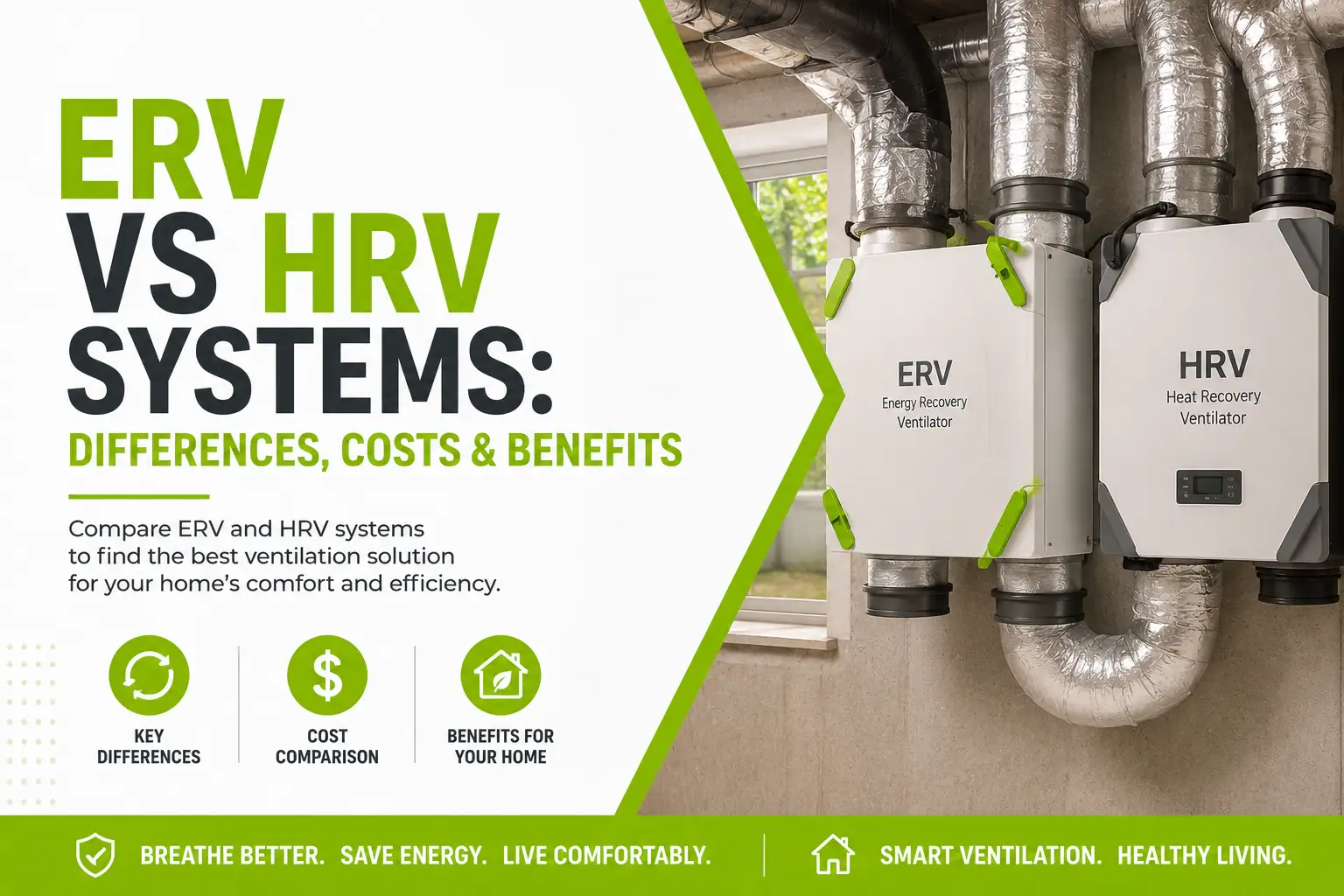

Understanding ERV vs HRV system differences explained is essential if you want better indoor air quality, improved humidity control, and a more energy efficient hvac system. Modern homes are tightly sealed, which means stale air builds up while fresh outdoor air struggles to enter. That imbalance directly impacts comfort, health, and utility costs.
Before choosing between erv hrv options, it is important to understand how ventilation ties into duct cleanliness and airflow. Many homeowners attempt DIY fixes like filters or vents, but without proper airflow pathways, results are limited. For example, improper duct maintenance can restrict incoming air and reduce system efficiency. Learn how proper airflow impacts ventilation in this guide on clean air ducts.
Why Home Ventilation Problems Matter More Than You Think
Poor home ventilation affects more than comfort. Without proper balanced ventilation, your home traps pollutants, allergens, and excess moisture. This leads to rising indoor humidity, mold risks, and poor air circulation. In hot humid climates, this problem becomes even worse, making homes feel sticky and uncomfortable despite running air conditioning constantly.
According to EPA indoor air quality research, indoor air can be significantly more polluted than outdoor air. Without a proper ventilation system, contaminants remain trapped. This is why ervs and hrvs are becoming essential for modern homes seeking consistent fresh air circulation.
Main Practical Differences Between ERV and HRV Systems
The core comparison in erv vs hrv system lies in how each system handles incoming fresh air and outgoing air. Both systems are types of air exchanger devices designed to improve indoor air quality, but their functionality differs in handling moisture and temperature transfer.
Here is a clear breakdown of difference between hrv and erv systems:
| Feature | HRV System | ERV System |
| Function | Heat recovery ventilation | Energy recovery ventilation |
| Humidity Transfer | No moisture transfer | Transfers moisture |
| Best Climate | Cold or dry climates | Hot humid climates |
| Energy Efficiency | Moderate | Higher energy recovery |
| Comfort Level | Can dry indoor air | Maintains indoor humidity |
As explained in U.S. Department of Energy ventilation guide, both systems recover energy from outgoing air but ERVs also manage moisture, making them ideal for humid regions. Discussions on platforms like Reddit and Quora often highlight how ERVs perform better in moisture-heavy environments.
Fast Solutions to Improve Ventilation Immediately
If your home struggles with poor airflow, you can take quick steps before installing a full erv/hrv system. These short-term solutions improve incoming air circulation and reduce stale air buildup, though they are not permanent replacements.
- Open windows strategically to create cross ventilation
- Use exhaust fans to remove outgoing air
- Replace HVAC filters regularly
- Check for blocked or dirty ducts
However, these quick fixes do not provide true balanced ventilation. Without controlled airflow, you still lose conditioned air and waste energy. According to BuildingGreen.org ventilation insights, mechanical systems like hrv systems and ERVs are the most reliable long-term solution.
System and Home Improvement Solutions That Actually Work
Installing a dedicated heat recovery ventilator hrv or ERV provides consistent airflow control. These systems pull in incoming fresh air while exhausting stale air, ensuring continuous circulation without energy loss. They integrate directly into your hvac system for seamless operation.
Beyond ventilation units, improving duct insulation and sealing leaks enhances system performance. Poor ductwork reduces energy efficient operation and weakens airflow balance. If your system struggles, you may need airflow optimization or repair, as explained in this guide on duct issues.
DIY vs Professional Installation Comparison
Many homeowners consider installing hvac hrv systems themselves, but DIY installations often fail due to airflow miscalculations and improper duct integration. A poorly installed erv hvac meaning setup can create pressure imbalances, leading to worse air quality instead of improvement.
- DIY systems lack proper airflow balancing
- Incorrect sizing reduces efficiency
- Poor installation causes air leakage
- No calibration for humidity control
Professional technicians ensure proper balancing an hrv, correct system sizing, and integration with your existing HVAC. They also identify hidden issues like mold or blockages, often discussed in homeowner forums such as Quora where DIY attempts frequently fall short.
Signs You Need a Professional ERV or HRV System
If you notice persistent air quality issues, it may be time to install a proper erv and hrv solution. These systems are not luxury upgrades anymore. They are essential for maintaining healthy indoor environments.
- Constant stale air or odors
- Excess indoor humidity
- Allergy symptoms indoors
- Poor airflow in multiple rooms
- High energy bills with low comfort
Ignoring these signs leads to worsening air quality and higher energy costs. If your ducts are also contributing to the issue, consider evaluating them with this resource on dirty ducts.
Why Choosing the Right Service Provider Matters
Installing ervs and hrvs requires more than equipment. It requires expertise in airflow design, duct systems, and climate-specific recommendations. A qualified provider ensures your ventilation system delivers consistent performance without wasting energy.
Air n Fires specializes in improving indoor air quality through professional inspection, repair, and ventilation solutions. Their team understands how incoming air, outgoing air, and system balance impact long-term comfort and efficiency.
FAQs About ERV and HRV Systems
What is an erv hrv system?
A erv hrv system is a mechanical ventilation system that exchanges stale air with fresh air. HRVs focus on heat recovery, while ERVs also manage moisture for better humidity control.
What is the difference between hrv and erv?
The main difference between hrv and erv is moisture transfer. HRVs do not handle humidity, while ERVs transfer moisture along with heat, making them ideal for hot humid climates.
Are hrv systems good for all homes?
hrv systems are best for colder or dry climates. In humid environments, they may reduce comfort by drying indoor air excessively, making ERVs a better option.
What does erv hvac meaning refer to?
erv hvac meaning refers to Energy Recovery Ventilation, a system that improves indoor air quality by exchanging heat and moisture between incoming fresh air and outgoing air.
Do I need balancing an hrv system?
Yes, balancing an hrv is essential. Without proper airflow balance, the system can create pressure issues, reducing efficiency and causing uneven ventilation throughout the home.
Is an air exchanger the same as ERV or HRV?
An air exchanger is a general term. Both ERVs and HRVs are types of air exchangers, but they differ in how they handle heat recovery and energy recovery.
Take the Next Step Toward Better Air Quality
If your home struggles with poor airflow, rising humidity, or uncomfortable indoor conditions, upgrading to the right erv vs hrv system can make a noticeable difference. While quick fixes help temporarily, long-term comfort comes from a properly designed and installed ventilation system.
Conclusion
Choosing between systems becomes easier once you understand ERV vs HRV system differences explained. The right system depends on your climate, home design, and indoor comfort needs. Whether you need better humidity control, improved airflow, or energy savings, a properly installed system delivers lasting results.
If you are ready to improve your home’s air quality and ventilation, explore professional solutions with Air n Fires and take the next step toward a healthier, more comfortable living environment.