
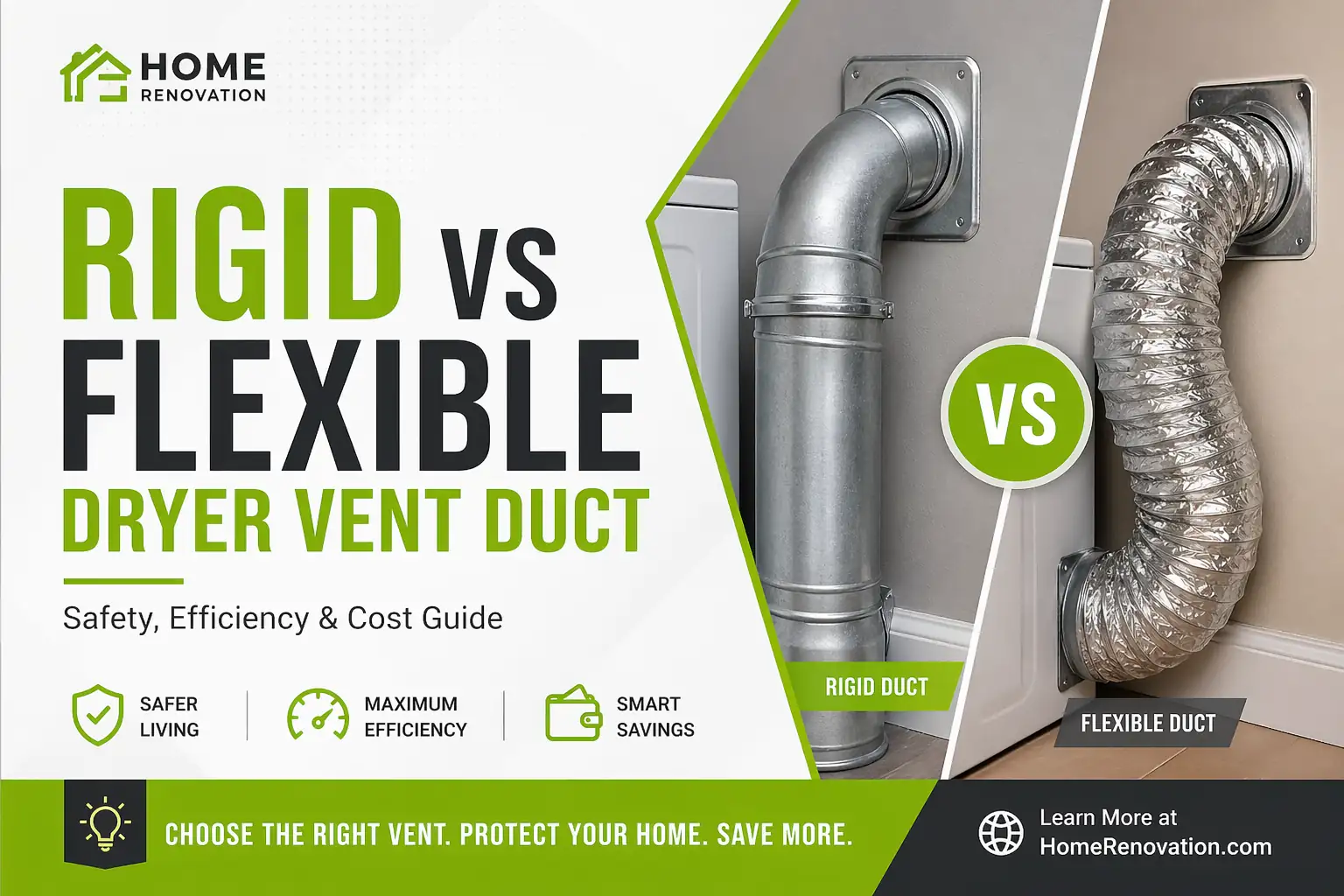

If you are researching rigid vs flexible dryer vent duct which is better, you are already thinking about safety, airflow, and long-term performance. Many homeowners overlook how much the right dryer vent setup impacts fire risk, drying time, and energy bills. A poor choice can restrict airflow, trap lint, and create hidden hazards. That is why understanding the difference between rigid ducts and flexible ductwork is critical before installation or replacement.
In real-world homes, the wrong material often leads to clogs, overheating, and inefficient drying cycles. If your system already struggles, you may notice warning signs covered in this guide on improve air quality. Whether you are upgrading or installing new hvac ducting, this guide will break down performance, cost, and safety so you can make the right decision.
Understanding Dryer Vent Duct Types
Rigid ductwork and flex duct are the two most common options used in modern exhaust system setups. Rigid systems are usually made from galvanized steel or aluminum, offering smooth interior walls that allow air and lint to pass efficiently. In contrast, flexible dryer ducts are designed with bends and ridges that make installation easier but often reduce airflow over time.
The difference becomes more noticeable in a long run installation. Rigid options maintain consistent airflow, while flexible duct vs rigid comparisons show flex ducts tend to trap lint and reduce efficiency. This is why many professionals recommend rigid metal duct for dryer systems, especially when safety and long-term performance are priorities.
Rigid vs Flexible Ducting Performance Comparison
When comparing flex duct vs rigid setups, airflow efficiency is one of the biggest deciding factors. Rigid metal ducts provide a straight, smooth pathway that minimizes resistance, making your dryer work less and dry faster. Meanwhile, flexible metal dryer duct systems often create friction points where lint accumulates, reducing airflow over time.
This performance gap becomes more critical in complex hvac system layouts. If your vent path includes turns or longer distances, rigid vs flexible ducting differences become obvious. Rigid ducts maintain airflow integrity, while flexible options can sag or compress, increasing drying time and energy consumption significantly.
The table below breaks down key differences in safety, efficiency, durability, and cost so you can choose the right solution for your dryer vent system.
| Feature | Rigid Dryer Vent Duct | Flexible Dryer Vent Duct |
| Material | Rigid metal such as aluminum or galvanized steel | Foil, plastic, or flexible metal dryer duct |
| Airflow Efficiency | Smooth interior allows maximum airflow | Ribbed interior restricts airflow and traps lint |
| Safety Level | High resistance to heat and fire | Higher fire risk due to lint buildup |
| Lint Accumulation | Minimal due to smooth metal ducts | High due to ridges in flex duct |
| Best Use Case | Full vent systems and long run installations | Short transition ducts behind dryer |
| Durability | Long-lasting and resistant to damage | Prone to tearing, sagging, and crushing |
| Installation | Requires precise fitting and professional setup | Easy to install and flexible around obstacles |
| Maintenance Needs | Low maintenance with proper installation | Frequent cleaning required due to buildup |
| Energy Efficiency | Improves dryer performance and reduces energy use | Reduces efficiency and increases drying time |
| Cost (Short-Term) | Higher upfront cost | Lower initial cost |
| Cost (Long-Term) | Cost-effective due to durability and efficiency | Higher due to repairs, cleaning, and inefficiency |
This comparison clearly shows why professionals prefer rigid ductwork for most installations.
Safety Differences That Matter Most
Safety is where the pros and cons become very clear. Rigid metal duct dryer vent systems are fire-resistant and less likely to trap lint. Their smooth design reduces buildup, which is a leading cause of dryer fires. Flexible options, especially plastic or thin foil, can overheat and ignite under extreme conditions.
According to U.S. Fire Administration guidance on dryer safety, lint buildup inside vents is a major fire hazard. Flexible ducts increase this risk due to their ribbed structure. This is why professionals rarely recommend them for permanent installations.
Cost vs Long-Term Value
At first glance, flexible ductwork seems cheaper and easier to install. It requires less labor and can fit into tight spaces without cutting or shaping. However, short-term savings often lead to higher long-term costs due to maintenance, frequent cleaning, and reduced efficiency.
On the other hand, metal ductwork made from galvanized steel may cost more upfront but offers durability and better airflow. Over time, homeowners save on energy bills and avoid costly repairs. When evaluating flexible duct vs rigid, it is important to look beyond installation cost and consider performance over several years.
Installation Challenges and Real-World Use
Installation plays a huge role in performance. Rigid ductwork requires precise measurements, cutting, and proper sealing to ensure no leaks. It is less forgiving than flex vent for dryer options, which can bend around obstacles and fit into tight spaces easily.
However, flexible ducts are often misused in areas where rigid ducts should be installed. They are best suited as transition ducts between the dryer and the main vent line. Using them for long runs increases risk and reduces system efficiency significantly.
When Flexible Ducts Make Sense
There are limited cases where flexible dryer duct solutions are acceptable. For short connections behind the dryer, especially where movement is needed, semi rigid ducts provide a balance between flexibility and airflow performance.
Even in these cases, experts recommend keeping the flexible section as short as possible. A properly designed system combines rigid ducts for the main line and flexible connectors only where absolutely necessary.
Common Problems with Poor Duct Choices
Improper duct selection leads to serious issues in your hvac ducting and dryer system. These problems often start small but escalate quickly if ignored, especially in homes with long vent runs or older systems.
- Lint buildup inside flex duct restricting airflow
- Overheating due to poor ventilation
- Higher energy bills from inefficient drying cycles
- Frequent clogs in metal ducts that are poorly installed
- Fire hazards from trapped lint in flexible ductwork
Why DIY Installations Often Fail
Many homeowners attempt to install or replace ducts without understanding airflow dynamics. While it seems simple, improper connections, sharp bends, and wrong materials can severely impact performance. DIY setups often use flexible dryer ducts in places where rigid ones are required.
If you have already tried fixing your system yourself, you may relate to this guide on DIY vs pro cleaning. Professional installation ensures correct routing, sealing, and compliance with safety standards, which DIY methods rarely achieve.
Signs Professional Service Is Needed
If your dryer is taking longer than usual or overheating, your dryer vent system may already be compromised. Restricted airflow from poor duct choice or buildup is often the root cause. You may also notice excessive lint around the vent opening or burning smells during operation.
In such cases, it is best to schedule a vent inspection to identify issues early. Ignoring these signs can lead to system damage or even fire risks, especially when using flexible duct vs rigid setups incorrectly.
Why Choose Air N Fire
Choosing the right professionals ensures your exhaust system works safely and efficiently. Experienced technicians understand how to design systems using rigid metal ducts for optimal airflow while minimizing risk. They also ensure compliance with building codes and safety standards.
From inspection to full installation, expert services help avoid costly mistakes. If you are considering an upgrade, you can explore vent cleaning to restore performance and extend the life of your system.
FAQs Flexible Duct vs Rigid
Which is safer rigid or flexible dryer duct?
Rigid ductwork is significantly safer because it resists heat and reduces lint buildup. Flexible ducts can trap lint due to their ridges, increasing fire risk over time, especially in long or poorly maintained vent systems.
Can flexible ducts be used permanently?
Flexible dryer duct should not be used for long-term full vent runs. It is only recommended for short connections. Permanent installations should rely on rigid metal duct systems for safety and efficiency.
Do rigid ducts improve dryer efficiency?
Yes, rigid ducts improve airflow, allowing faster drying cycles. This reduces energy usage and wear on your appliance, making them a better long-term investment compared to flexible options.
Why do flexible ducts clog faster?
The ridged interior of flexible ductwork traps lint easily. Over time, this buildup restricts airflow and creates blockages, which can lead to overheating and increased fire risk.
Is semi rigid duct a good compromise?
Semi rigid ducts offer better airflow than flexible foil ducts while still allowing some flexibility. They are commonly used as short transition ducts but should not replace full rigid systems.
How often should dryer vents be cleaned?
Most systems should be cleaned at least once a year. Homes with long run ducts or heavy usage may require more frequent cleaning to prevent buildup and maintain efficiency.
Get Professional Dryer Vent Solutions Today
Choosing between rigid vs flexible dryer vent duct which is better ultimately comes down to safety, performance, and long-term value. While flexible options may seem convenient, they rarely deliver the reliability needed for a safe home.
If your system is outdated or underperforming, it is time to take action. Professional inspection and installation ensure your home stays safe and efficient. Visit Air N Fire to schedule your service and get expert guidance tailored to your home.