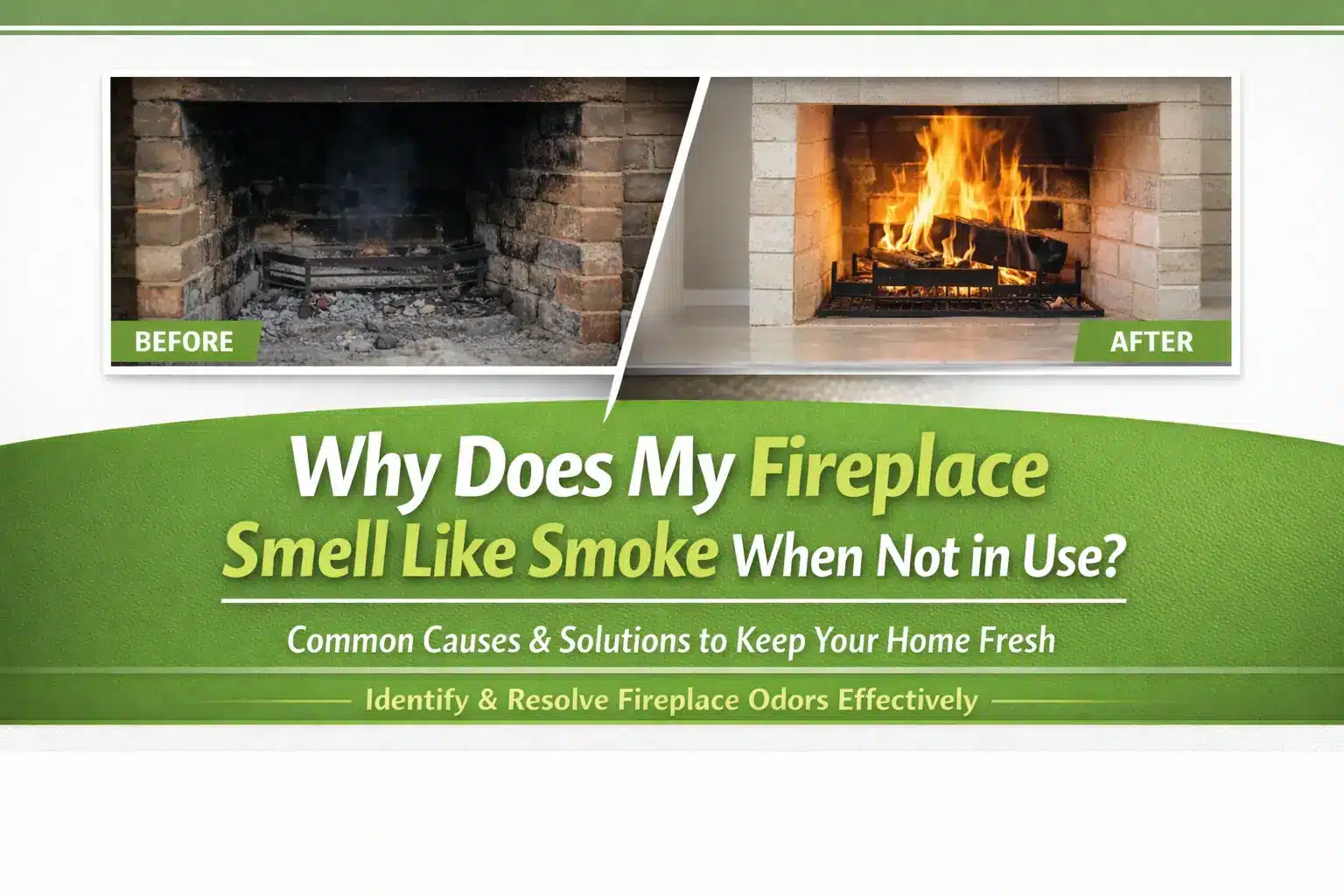

If you keep asking yourself why does my fireplace smell like smoke even on days when you have not burned anything, you are not alone. This is one of the most common complaints homeowners bring to chimney professionals across Texas and beyond. That stale, smoky odor drifting into your living room is more than just annoying. It is usually a sign that something in your chimney system needs attention.
The good news is that once you understand the real causes behind a smoky fireplace smell, fixing it becomes much more straightforward.
What Causes Fireplace Smell in Your House?
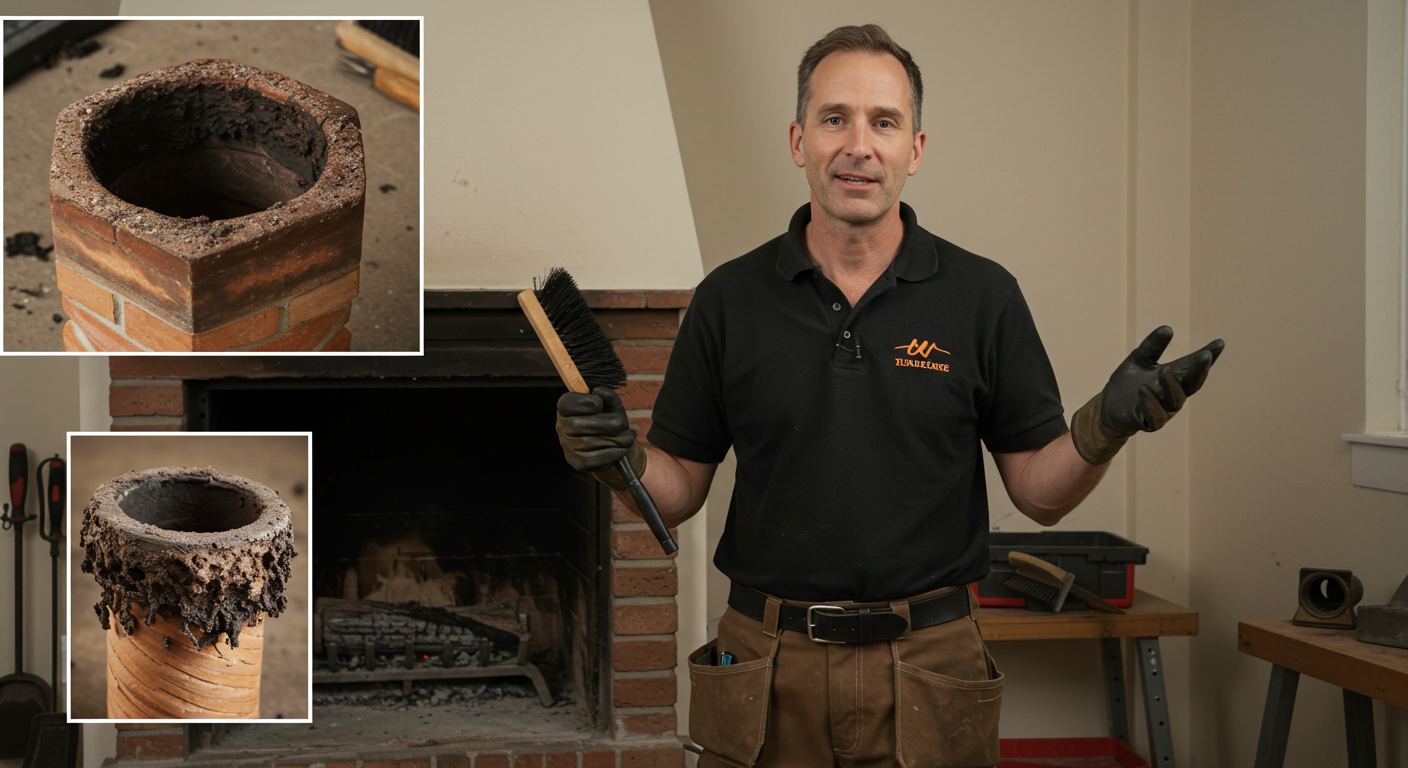
The most common reason behind a fireplace smell in house situations is the combination of creosote buildup and moisture inside the flue. When you burn wood, tar-like creosote coats the inner walls of your chimney. Over time, especially during humid months, this creosote absorbs moisture and releases a sharp, acrid fireplace odor that seeps into your living space even when the fireplace is completely cold. Many homeowners do not realize how much residue builds up after just a few seasons of regular use.
Beyond creosote, a blocked or uncapped flue can trap stagnant air, debris, leaves, and even small animals inside the chimney. All of these things contribute to the persistent smoke smell from fireplace that seems to have no clear source. If your home is in the Dallas or Plano area and you notice this smell getting worse in summer or after rain, that is your chimney telling you it needs a proper inspection. You can learn more about what contributes to these odors by reading our guide on signs you need chimney cleaning.
Negative Air Pressure: The Hidden Culprit Behind Smoky Fireplace Smell
Negative air pressure inside your home is one of the least obvious but most significant reasons that fireplace smells of smoke drift indoors. When your house is tightly sealed, modern insulation creates a vacuum-like effect. Your kitchen or bathroom exhaust fan pulls air out of the house, and the easiest replacement air source is often the chimney. This backdraft pulls the stale, smoky air sitting in your flue right into your living room. The damper being partially open or closed incorrectly makes this problem even worse.
The fix for air pressure-related fireplace smell is not always simple. You may need to crack a window near the fireplace to equalize pressure, or you may need a professional to evaluate your home’s ventilation setup. In some cases, a top-mounted damper or a specialized chimney cap can help regulate airflow and stop outside air from forcing its way down entering your chimney opening. Either way, diagnosing this accurately requires an experienced eye, not guesswork.
Fireplace Smoke Smell in House: Is It Dangerous?
Yes, a persistent fireplace smoke smell in house situations can pose real health risks, and it should not be dismissed as a minor inconvenience. Creosote particles, mold spores from moisture damage, and combustion byproducts can all circulate through your home’s air when there is a problem with your chimney system. The most serious concern is carbon monoxide, a colorless, odorless gas that can accompany smoke odors when there is a venting failure. Even if you cannot smell carbon monoxide directly, its presence alongside a smoke odor is a genuine danger.
Beyond carbon monoxide, long-term exposure to airborne creosote particles and mold is linked to respiratory issues, especially for children, elderly residents, and people with existing lung conditions. Smelly fireplaces are often a sign of a system that is not functioning properly, and ignoring the smell means allowing these contaminants to keep circulating. The EPA’s guidance on wood smoke and indoor air quality clearly outlines why smoke exposure indoors is a health concern that warrants action.
Water Damage and Moisture: Why Your Chimney Smells Musty
Water damage inside a chimney is one of the most underdiagnosed causes of persistent fireplace odor. When rain, snow, or condensation gets into your flue, it mixes with soot and creosote to create a heavy, musty odor that is hard to ignore. This is particularly common in older homes where the chimney flashing, mortar joints, or chimney crown have started to crack or deteriorate. Moisture also creates the perfect environment for mold growth inside the flue, which adds another layer of unhealthy air to the problem.
If you notice that the fireplace smell gets stronger after rain or during humid weather, moisture is almost certainly involved. A damaged or missing chimney cap is often the direct entry point for water. Installing or replacing a chimney cap is one of the most cost-effective things you can do to protect your chimney from ongoing moisture damage. However, if moisture has already caused significant interior damage, a full inspection by certified chimney inspectors is the only way to assess the full extent of the problem.
Can a Dead Animal Cause Fireplace Smell?
Yes, and more often than people expect. Birds, squirrels, and raccoons regularly find their way into unprotected chimneys. When they cannot escape, they die inside the flue. A dead animal inside your chimney produces an overwhelming odor that travels directly into your home. Chimney sweeps trained for wildlife removal can safely extract the remains and clean the affected area, then recommend a proper chimney cap to prevent it from happening again.
How to Get Rid of Fireplace Smell: What Actually Works
Most homeowners try DIY solutions first when they want to know how to get rid of fireplace smell. Baking soda in the firebox, commercial chimney deodorants, and activated charcoal are popular options that can reduce odor temporarily. But here is the honest truth: these solutions mask the smell rather than fix the cause. If you have creosote buildup, moisture intrusion, a damaged damper, or a critter problem, no amount of baking soda is going to solve it. The smell will come back, often stronger than before.
The only method that consistently works long-term is having your chimney cleaned by a certified professional. A thorough cleaning removes the creosote, soot, and debris that feed the odor. After cleaning, any structural issues like a cracked flue liner, a broken damper, or a missing cap can be identified and repaired. If you want a deeper understanding of what this process looks like, our article on professional chimney cleaning methods walks through the full scope of what a real cleaning involves.
Does Closing the Damper Stop Fireplace Smell?
Closing the damper when the fireplace is not in use helps reduce smoke in house fireplace situations, but it is not a complete fix. A damaged or warped damper does not seal properly, which means conditioned air escapes and outside air keeps entering your chimney. If your damper is worn out, replacing it is a smart investment that improves both odor control and energy efficiency.
Why Does My Fireplace Smell Like Smoke in Texas? (Plano, Dallas, Fort Worth)
Texas homeowners often ask specifically why does my fireplace smell like smoke Texas, and there are a few regional factors that make this problem more common here. The hot and humid summers in the DFW area accelerate moisture absorption in creosote deposits, intensifying the smell. Many Texas homes also use tightly sealed, energy-efficient construction to fight the heat, which increases the negative air pressure problem described above. If you are in Plano, Dallas, or Fort Worth, your fireplace is working against both climate and construction challenges.
For homeowners asking why does my fireplace smell like smoke Plano, why does my fireplace smell like smoke Dallas, or why does my fireplace smell like smoke Fort Worth, the answer is the same: local conditions make regular maintenance more important, not less. Annual chimney inspections are not optional in this climate. They are the most reliable way to stay ahead of creosote buildup, moisture damage, and air pressure problems before they turn into costly repairs. Our chimney sweep services in Plano and across the DFW area are designed specifically for Texas homes and their unique challenges.
Gas Fireplace Odor: A Different Problem
A gas fireplace can also produce odors, though the cause is different. Dust accumulation on the burner, issues with the venting system, or a malfunctioning pilot light can all produce a faint burning or smoky smell. If you notice your gas fireplace smells like something is burning or has an unusual odor, do not ignore it. Schedule an inspection with a qualified technician right away, as gas system issues carry serious safety implications.
Signs You Need Professional Chimney Service Right Away
Some fireplace odor situations are manageable with basic maintenance, but others require immediate professional intervention. If you notice a heavy, persistent fireplace smell that does not go away after a few days, or if the smell is accompanied by visible soot around the fireplace opening, those are clear signals that your chimney system has a serious problem. Similarly, if you light a fire and smoke immediately fills the room rather than drafting upward, your flue is blocked or your draft system is failing.
Other warning signs include water stains on the ceiling or walls near the fireplace, a white powder called efflorescence on the exterior brickwork, or a visible gap between the chimney and the roofline. These are all symptoms of structural failure that go beyond routine cleaning. According to research from the National Fire Protection Association (NFPA), chimney fires cause hundreds of millions of dollars in home damage annually, most of which could be prevented with regular inspections and cleanings. If you notice any of the signs above, read about the signs your fireplace needs cleaning in Texas before things get worse.
Why Choose Air N Fire for Chimney and Fireplace Service
Air N Fire is a trusted name across the DFW area for chimney sweeping, fireplace inspections, and air quality services. The team holds professional certifications and carries hands-on experience with both wood-burning and gas fireplace systems across Texas homes. Every inspection and cleaning is done with attention to safety first, using industry-standard equipment and proven techniques. Air N Fire does not cut corners or upsell services you do not need. What you get is an honest assessment and work done right the first time.
Whether you are in Plano, Dallas, Fort Worth, McKinney, or anywhere in the surrounding area, Air N Fire has local chimney sweeps ready to diagnose and fix your smelly fireplace problem. From routine annual chimney cleanings to full chimney inspections and damper repairs, every service is focused on keeping your home safe and your air clean. The team also serves homeowners needing chimney sweep services in Fort Worth, McKinney, and Carrollton with the same level of quality and professionalism. According to the Chimney Safety Institute of America (CSIA), annual chimney sweeping by a certified sweep is the single most effective way to prevent chimney-related fires and carbon monoxide incidents.
Frequently Asked Questions About Fireplace Smell
Why does my fireplace smell like smoke when it’s not in use?
A fireplace smells like smoke when not in use mainly due to negative air pressure, a dirty chimney, a missing or damaged chimney cap, moisture inside the flue, or creosote buildup. All of these issues pull smoky air back into your living space.
Is fireplace smoke smell in the house dangerous?
Yes, a persistent fireplace smoke smell in house can be dangerous. It may indicate carbon monoxide risks, mold growth from water damage, or toxic creosote particles circulating through your home’s air. A professional inspection is strongly recommended.
How do I get rid of fireplace smell in my house?
To get rid of fireplace smell, start by having your chimney cleaned professionally, sealing the damper when not in use, and installing a quality chimney cap. Addressing moisture and air pressure issues also helps eliminate the odor long-term.
Can a gas fireplace smell like smoke?
A gas fireplace typically does not produce smoke smell, but it can emit odors from dust burning off the burner, gas leaks, or venting issues. If your gas fireplace smells like smoke or sulfur, schedule a professional inspection immediately.
Does negative air pressure cause fireplace smoke smell?
Yes, negative air pressure is one of the most common reasons for smoky fireplace smell. When your home is tightly sealed, kitchen or bathroom exhaust fan use can pull air down the chimney, dragging smoke smell back into the house.
How often should I have my chimney inspected?
Annual chimney inspections are recommended by the NFPA and chimney sweeps safety experts. Even if you rarely use your fireplace, a yearly inspection catches moisture damage, blockages, animal nests, and creosote buildup before they become serious problems.
Why does my fireplace smell worse in summer?
In summer, high humidity increases moisture inside the flue, which activates creosote and soot deposits, creating a stronger musty odor. Hot outside temperatures also push air down into the chimney rather than allowing it to draft upward normally.
Can a dead animal in the chimney cause smoke smell?
Absolutely. A dead animal inside the flue can produce an extremely foul odor that travels into your living space. Chimney sweeps routinely find birds, squirrels, and raccoons trapped inside unprotected chimneys without a chimney cap installed.
Ready to Stop That Fireplace Smell for Good?
If your fireplace keeps releasing that stale, smoky odor, the problem is not going to fix itself. The longer moisture, creosote, and blockages sit in your chimney, the more damage they cause and the worse the smell gets. A certified chimney inspection is the fastest and most reliable way to find out exactly what is going on and get it resolved.
Schedule your fireplace inspection or chimney sweep service today. You can also explore our fireplace maintenance services if you want a full seasonal checkup. Do not wait until the smell becomes a health hazard or a fire risk. Call now and let a professional take a look.
Conclusion
Understanding why does my fireplace smell like smoke is the first step toward a cleaner, safer home. Whether the cause is negative air pressure, creosote buildup, moisture from water damage, a missing chimney cap, or even a dead animal inside the flue, each of these problems has a real solution. DIY remedies can offer temporary relief, but they cannot replace a proper professional inspection and cleaning. The smell is your home communicating that something needs attention, and acting on it quickly protects both your family’s health and the long-term condition of your chimney.
If you are in the Plano, Dallas, or Fort Worth area and dealing with a persistent fireplace odor, Air N Fire is here to help. Our certified team brings local expertise, honest assessments, and real solutions to every job. Contact us today to schedule your inspection and take the first step toward a smoke-free, odor-free home.