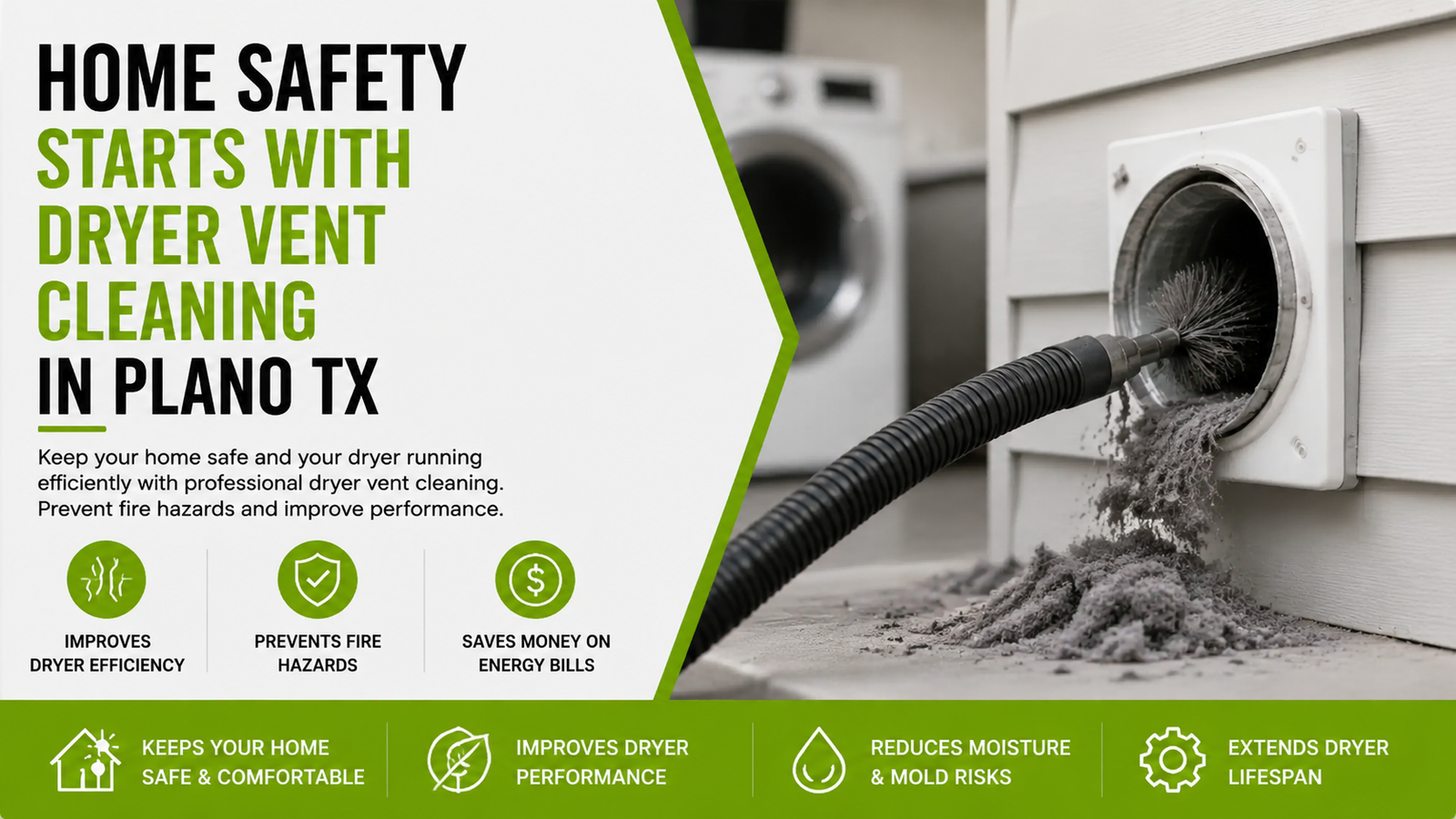


Dryer vent fires are a serious yet often overlooked safety issue in many Texas homes. While dryers are considered everyday appliances, the hidden dangers inside a dryer vent system can quickly turn routine laundry into a fire hazard. According to fire safety experts, dryer vent fires are most commonly caused by lint buildup, restricted airflow, and poor maintenance issues that develop slowly and often go unnoticed.
Texas homeowners face an even higher dryer vent fire risk due to warmer climates, frequent dryer use, and longer vent runs in larger homes. This guide explains what causes dryer vent fires, how to recognize the warning signs of dryer vent fire risk, and the most effective dryer vent fire prevention tips to keep your home safe.
Why Dryer Vent Fires Are a Serious Safety Risk in Texas Homes
Many people underestimate the danger of a neglected dryer vent. A dryer produces heat, moisture, and lint during every cycle. When that hot air cannot escape properly through the dryer exhaust duct, heat builds up inside the vent line. Over time, this trapped heat can ignite lint accumulation, one of the most combustible materials found in a home.
In Texas, homes often run out of hot water year-round due to humidity, frequent washing, and family size. Combined with high outdoor temperatures, this creates ideal conditions for residential fire hazards. Without proper dryer vent safety practices, the risk of a dryer-related fire increases significantly.
What Causes Dryer Vent Fires in Homes?
Understanding dryer vent fire causes is the first step toward prevention. Most dryer fires are not sudden accidents they are the result of ongoing problems that build up over time.
Lint Buildup Inside Dryer Vents
The most common cause of dryer lint fire incidents is lint buildup inside dryer vents. While lint traps catch a portion of lint, fine fibers escape and settle inside the vent pipe. As lint accumulation increases, it restricts airflow and traps heat inside the vent.
Because lint ignites easily, prolonged exposure to high temperatures can cause it to catch fire, especially when airflow is restricted.
Clogged or Blocked Dryer Vent Systems
A clogged dryer vent prevents hot air from exiting the home efficiently. Blockages often form due to compacted lint, crushed ducts, or exterior vent hood blockage caused by debris or bird nests. This dryer vent blockage leads to restricted airflow, forcing heat to remain inside the vent system and increasing the chance of ignition.
Improper Dryer Vent Installation or Materials
Poor installation plays a major role in dryer exhaust fire risks. Flexible plastic or foil ducts sag easily, trap lint, and may melt under high heat. In contrast, rigid metal dryer ducts allow smooth airflow and are far more fire-resistant. Long vent runs with multiple bends also increase lint buildup and heat retention.
Lack of Dryer Vent Maintenance and Inspection
Skipping regular dryer vent maintenance allows small issues to grow unnoticed. Without periodic dryer vent inspection, homeowners may never see internal lint buildup or airflow restrictions until a serious problem occurs. Lack of maintenance is one of the leading contributors to dryer vent fire risk.
What Are the Warning Signs of a Dryer Vent Fire Risk?
Recognizing the warning signs of dryer vent fire risk early can prevent dangerous outcomes and costly repairs.
Dryer Takes Longer to Dry Clothes
When a dryer takes longer to dry clothes, it usually means airflow is restricted. Blocked vents force the dryer to run longer cycles, increasing internal heat and stress on the appliance.
Burning Smell or Excessive Heat from the Dryer
A burning smell from the dryer or a dryer that feels unusually hot indicates an overheating dryer. These signs suggest heat is not escaping properly through the dryer exhaust duct and should never be ignored.
Lint Around the Dryer Vent Opening
Visible lint around the dryer vent opening, especially on the outside of the home, is a strong indicator of internal blockage. This lint buildup shows that exhaust air is struggling to pass through the vent line.
Dryer Shuts Off Unexpectedly
If your dryer shuts off unexpectedly, it may be activating built-in safety sensors due to excessive heat. This is often linked to airflow restriction in dryer vents and should be addressed immediately.
Is a Clogged Dryer Vent Dangerous for Your Home?
Many homeowners ask, is a clogged dryer vent dangerous? The answer is yes. A blocked vent traps heat, increases dryer vent fire risk, and puts stress on the dryer’s components. Beyond fire hazards, clogged vents can damage the appliance, raise energy bills, and reduce the dryer’s lifespan.
How to Prevent Dryer Vent Fires in Texas Homes
Effective dryer vent fire prevention focuses on airflow, materials, and consistent maintenance.
Regular Dryer Vent Cleaning Schedule
Knowing how often dryer vents should be cleaned is essential. Most homes should schedule professional dryer vent cleaning at least once a year. Homes with frequent dryer use or large families may need cleaning more often to prevent dryer lint buildup.
Proper Dryer Vent Maintenance Practices
Good dryer vent maintenance includes cleaning the lint trap after every load, checking the exterior vent hood regularly, and ensuring the dryer vent system remains properly connected and undamaged.
Use Fire-Safe Dryer Vent Materials
Replacing flexible or plastic vents with rigid or semi-rigid metal dryer ducts significantly reduces fire risk. Proper materials help prevent heat from being trapped in exhaust ducts and allow lint to exit more efficiently.
Annual Dryer Vent Inspection by Professionals
A professional dryer vent inspection can detect hidden lint buildup, crushed ducts, and airflow problems that homeowners often miss. Inspections play a crucial role in reducing dryer vent fire causes before they become dangerous.
Dryer Vent Fire Prevention Checklist for Homeowners
A simple dryer vent fire prevention checklist can help reduce risk:
- Monitor drying time changes
- Watch for overheating or burning odors
- Inspect the exterior vent opening regularly
- Schedule annual professional cleaning
Following these steps improves appliance fire prevention and long-term home safety.
Professional Dryer Vent Cleaning vs DIY: What’s Safer?
DIY cleaning methods typically remove only surface lint near the dryer. Professional dryer vent cleaning uses specialized tools to clear deep lint buildup throughout the dryer exhaust duct. Professionals also identify structural problems that contribute to dryer vent fire risk, making professional service the safer and more effective option.
When Should You Call a Dryer Vent Cleaning Expert in Texas?
You should contact a professional if you notice warning signs such as frequent dryer overheating, burning smells, visible lint buildup, or repeated long drying cycles. Timely dryer vent repair and cleaning restore proper airflow and significantly reduce fire risk.
Conclusion
Dryer vent fires are preventable when homeowners understand the risks and take proactive steps. Regular cleaning, proper materials, and professional inspections significantly reduce dryer vent fire risk while improving appliance efficiency and overall home safety. Staying alert to warning signs and maintaining a clean dryer vent system can protect both your property and your family.
At Air N Fire, we believe that informed homeowners make safer homes and dryer vent care is a critical part of that protection.
FAQs – Dryer Vent Fires Texas Homes
What causes dryer vent fires in Texas homes?
Lint buildup, blocked vents, poor airflow, and lack of maintenance are the primary causes.
How often should dryer vents be cleaned?
At least once a year, or more often if the dryer is used frequently.
What are the warning signs of dryer vent fire risk?
Long drying times, overheating, burning smells, and lint around the vent opening.
Is professional dryer vent cleaning necessary?
Yes. Professionals remove deep lint buildup and detect hidden hazards.
Can a clogged dryer vent damage my dryer?
Yes. Restricted airflow can cause overheating, breakdowns, and reduced lifespan.