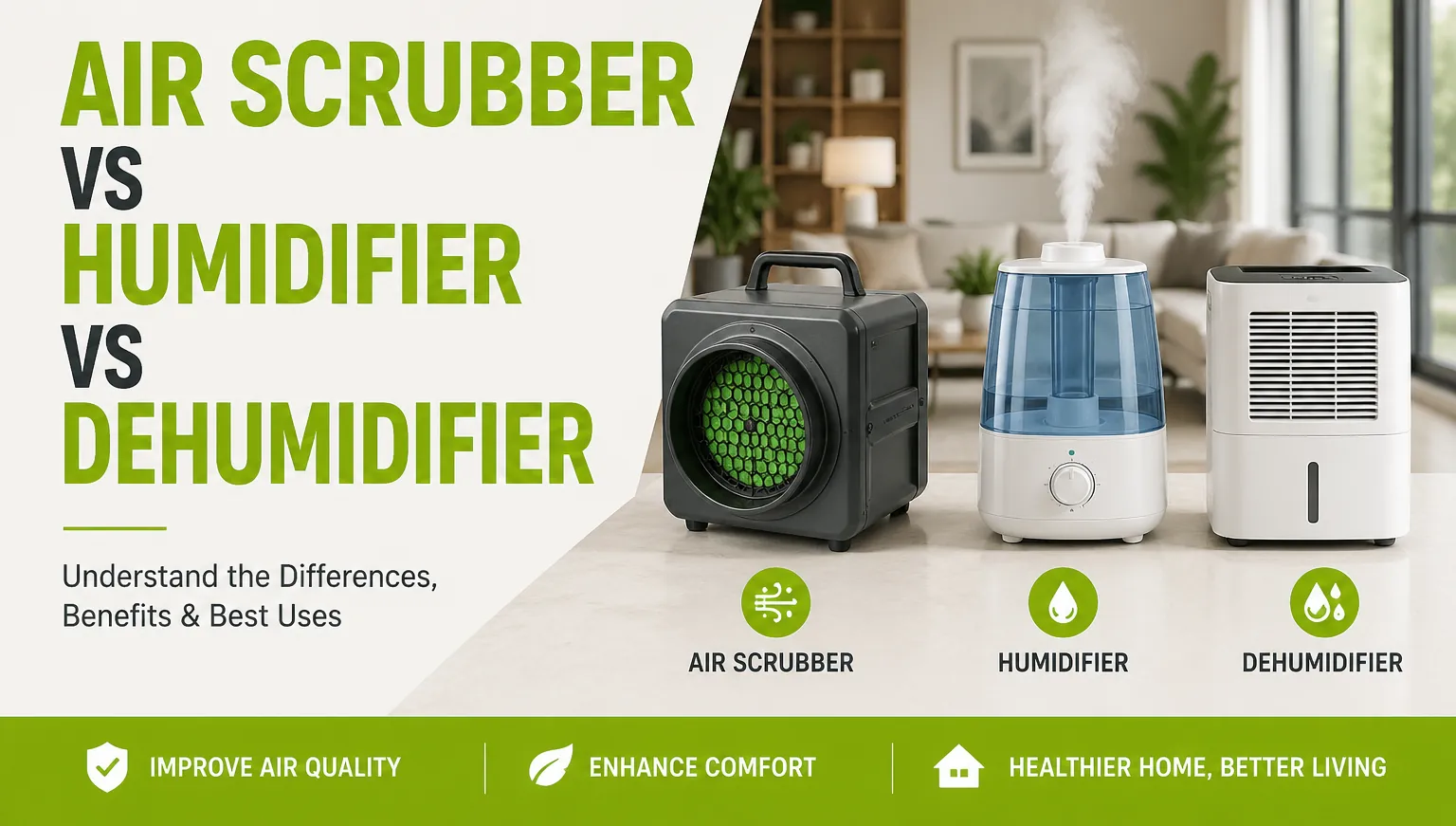

When homeowners compare air scrubber vs humidifier vs dehumidifier, they are usually trying to fix a real comfort or health issue inside their home. Whether it is dry air, excess humidity, or poor air quality, choosing the wrong device can waste money and still leave your air in your home unhealthy. Before investing, it is important to understand how each system works and how it connects to your hvac system.
Many homeowners also overlook how ventilation and duct cleanliness affect performance. Even the best air purifier systems house setup will struggle if ducts are clogged or contaminated. That is why combining equipment upgrades with proper maintenance like vent cleaning creates better results. Let’s break down each system so you can choose the right solution for your needs.
What Is an Air Scrubber and How It Improves Air Quality
An air scrubber is a whole home air purification system installed inside your hvac system. It actively removes contaminants such as bacteria, allergens, and airborne particles from indoor air. Unlike standard air filters, it uses advanced technology to neutralize pollutants instead of just trapping them. This makes it one of the most effective solutions for improving air quality across the entire home.
If you suffer from allergies or struggle with persistent odors, an air scrubber can significantly improve indoor air quality. However, its performance depends heavily on clean ductwork and proper airflow. Dirty ducts can reintroduce pollutants into the system, which is why services like duct cleaning are often required alongside installation to ensure the system works efficiently.
Key Benefits of Air Scrubbers
Air scrubbers are ideal for whole home protection. They reduce airborne contaminants, eliminate odors, and help control bacteria growth. They also work continuously within your house air purifier system, making them more powerful than portable units. This is why they are often recommended for families dealing with asthma symptoms or severe allergy triggers.
What Is a Humidifier and When You Need One
A humidifier is designed to add moisture or moisture to the air when your home becomes too dry. Low humidity often happens during winter or in climates where heating systems remove moisture from the air. This can lead to dry skin, irritated sinuses, and worsened asthma symptoms. A humidifier helps balance humidity levels for better comfort.
If you are wondering humidifier or purifier for asthma, the answer depends on your environment. A humidifier helps when dryness is the main trigger, but it does not clean pollutants. In fact, improper use can encourage dust mite growth if humidity gets too high. That is why proper monitoring and professional guidance are essential for safe and effective use.
Common Uses of Humidifiers
Humidifiers are commonly used to relieve dry throat, reduce static electricity, and protect wooden furniture. They are also helpful in improving sleep quality. However, they must be cleaned regularly to avoid mold buildup, which can worsen indoor air problems instead of fixing them.
What Is a Dehumidifier and Why It Matters
A dehumidifier removes excess moisture from the air, making it ideal for humid climates or homes with poor ventilation. High humidity levels can lead to mold growth, musty odors, and structural damage. It also creates a perfect environment for allergens, which can trigger respiratory issues.
When comparing air purifier vs dehumidifier for allergies, a dehumidifier helps by reducing moisture that allows allergens to thrive. However, it does not remove airborne particles. That is why many homes benefit from combining purifiers and dehumidifiers for a complete solution. If humidity issues persist, it may indicate deeper HVAC or duct problems that require professional inspection.
When to Use a Dehumidifier
Dehumidifiers are best used in basements, bathrooms, and homes with visible condensation. They also help reduce mold risk and improve comfort. However, they need proper drainage and maintenance to function efficiently over time.
Air Scrubber vs Humidifier vs Dehumidifier Comparison Table
Choosing between these systems depends on your specific air concerns. Below is a clear comparison to help you decide which solution fits your needs and how each impacts your indoor air.
| Feature | Air Scrubber | Humidifier | Dehumidifier |
| Primary Function | Air purification | Add moisture | Remove moisture |
| Best For | Allergies, bacteria | Dry air issues | Humidity control |
| Impact on Allergies | High improvement | Moderate | Indirect improvement |
| Works With HVAC | Yes | Optional | Optional |
| Maintenance Level | Moderate | High cleaning | Moderate |
Air Purifier or Dehumidifier: Which One Is Better for Allergies
If you are comparing air purifier or dehumidifier, the answer depends on what is causing your symptoms. An air purifier removes airborne particles like pollen and dust, while a dehumidifier reduces moisture that allows allergens to grow. Both play different roles in improving air quality.
For severe cases, combining both systems often delivers the best results. Still, even the best equipment will not perform well if your ducts are contaminated. That is why homeowners often pair these systems with air quality tips and professional cleaning services to ensure consistent performance.
Trusted Research on Indoor Air Quality
Understanding indoor air solutions is easier when backed by reliable research. Organizations like the EPA Indoor Air Quality Guide explain how pollutants affect your home and health. Their findings show that poor indoor air can be more polluted than outdoor environments, especially without proper filtration and ventilation.
Academic and industry sources also support these findings. The Harvard Indoor Air Quality Resource and ASHRAE Air Quality Standards highlight how humidity control and air purification systems work together. These resources reinforce why combining the right equipment with proper HVAC maintenance is critical for long term air quality improvements.
Air Filter vs Humidifier: Understanding the Difference
The debate around air filter vs humidifier comes down to function. Air filters are designed to trap particles, while humidifiers change moisture levels. Filters are rated using merv ratings, which determine how effectively they capture contaminants.
While both contribute to healthier air, they solve different problems. A clogged hvac air intake filter can restrict airflow and reduce efficiency. That is why routine inspection and maintenance are necessary to ensure your system works properly without causing additional issues.
Signs Professional Service Is Needed
Many homeowners try DIY fixes, but these often fail because they only address surface problems. If your air cleaner is not improving conditions, the issue could be deeper within your HVAC system. Signs like uneven airflow, persistent odors, or rising allergy symptoms usually point to underlying duct contamination or system inefficiencies.
Professional service becomes necessary when equipment alone cannot fix the issue. Technicians can inspect airflow, evaluate air filters, and identify hidden problems. Services like duct service ensure your entire system supports clean, healthy air rather than working against it.
Why Choose Air N Fire
Choosing the right company matters just as much as choosing the right equipment. A professional team understands how air purifier and dehumidifier systems interact with your HVAC setup. They do not just install devices. They diagnose the root cause and recommend solutions that actually improve long term air performance.
Air N Fire focuses on complete indoor air solutions, not quick fixes. From inspection to cleaning and system upgrades, their approach ensures your home maintains balanced humidity levels and clean indoor air. This reduces breakdowns, improves efficiency, and helps your system deliver consistent comfort year round.
FAQs Air Scrubber vs Humidifier vs Dehumidifier
What is the difference between humidifier and dehumidifier and air purifier?
A humidifier adds moisture, a dehumidifier removes moisture, and an air purifier cleans airborne particles. Each solves a different problem. Choosing the right one depends on whether your issue is dryness, humidity, or contamination in your indoor air.
What is better for allergies humidifier or air purifier?
An air purifier is generally better for allergies because it removes airborne triggers. A humidifier helps only if dry air worsens symptoms. In many cases, combining both provides better relief for people who suffer from allergies.
Can I use purifier and a humidifier together?
Yes, using a purifier and a humidifier together can improve comfort and air quality. One cleans the air while the other balances moisture. Proper maintenance is essential to prevent mold or reduced performance.
Do dehumidifier and HEPA filter work together?
Yes, a dehumidifier controls moisture while a HEPA filter captures fine particles. Together, they create a cleaner and drier environment, reducing mold growth and airborne allergens inside your home.
Are air purifier systems house worth it?
Whole house systems are worth it if you want consistent air quality in every room. They work with your HVAC system to provide continuous purification instead of limited coverage like portable units.
What are advantages of air filter upgrades?
Upgrading air filters improves airflow, captures more pollutants, and enhances HVAC efficiency. Higher MERV ratings provide better filtration, but they must match your system capacity to avoid airflow restrictions.
Take the Next Step Toward Cleaner Air
Choosing between air scrubber vs humidifier vs dehumidifier comes down to identifying the real issue in your home. If you are dealing with poor air quality, excess humidity, or persistent dryness, guessing will not solve the problem. A professional evaluation ensures you invest in the right solution the first time.
If your system is not delivering clean, balanced air, it is time to take action. Schedule an inspection, get expert guidance, and fix the root cause instead of relying on temporary fixes. Visit Air N Fire to book your service and start improving your indoor environment today.