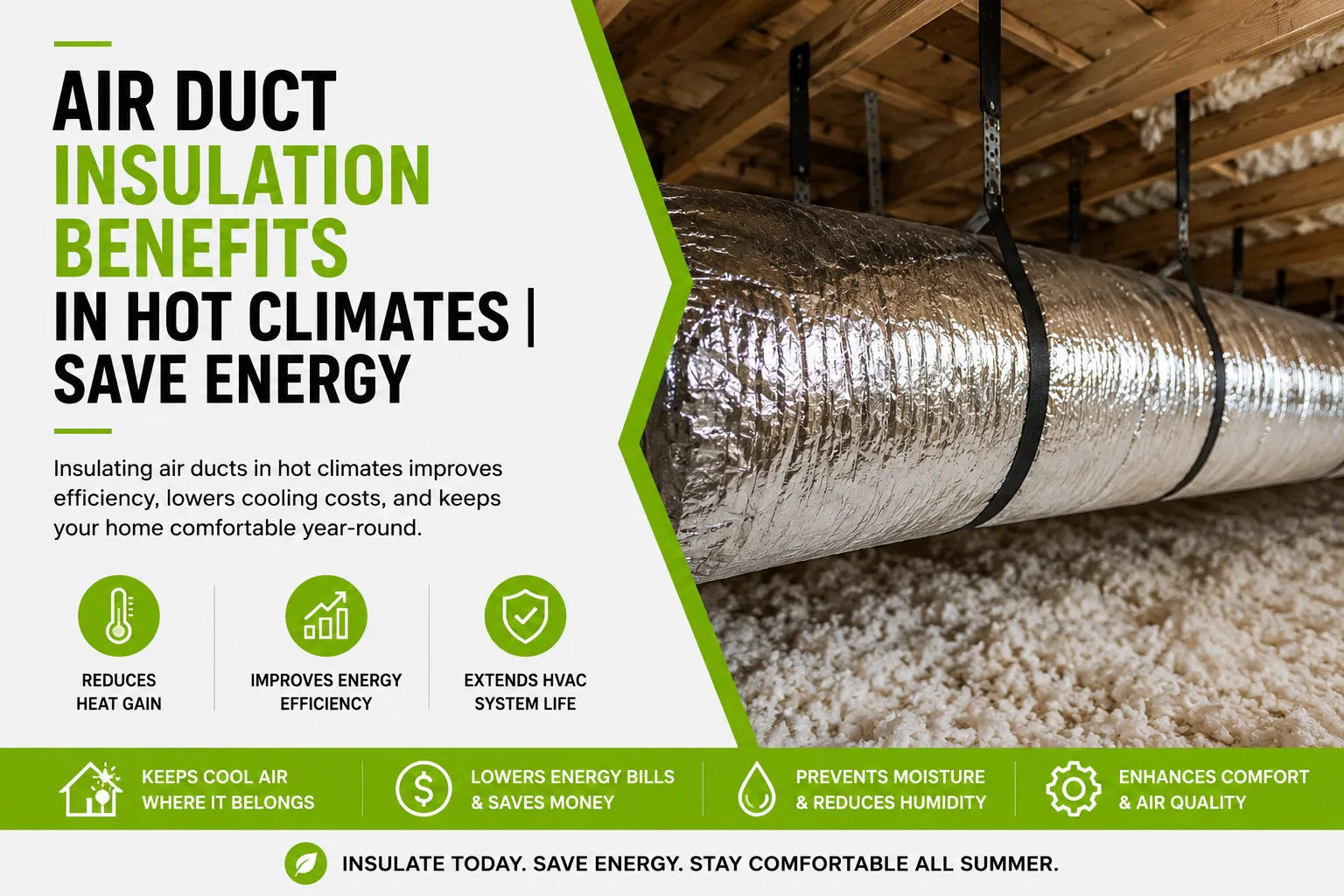

In regions that experience long, intense summers, understanding the air duct insulation benefits in hot climates can make a significant difference in both household comfort and monthly utility costs. Many homeowners focus on upgrading their air conditioner while overlooking the condition of their ductwork. When conditioned air travels through poorly insulated ducts in scorching attics or crawl spaces, substantial energy loss occurs before that air ever reaches your living spaces. This directly impacts home comfort, increases energy bills, and places additional strain on your hvac system. Weather conditions can significantly affect duct performance, as explained in this detailed guide about duct weather impact.
For homeowners throughout Texas, especially those researching air duct insulation benefits in hot climates texas, improving duct insulation is one of the most practical ways to improve cooling performance. Whether you live in Dallas, Plano, Fort Worth, or surrounding communities, properly insulated ductwork helps maintain consistent indoor temperatures, supports reducing energy waste, and improves overall HVAC efficiency.
Why Air Duct Insulation Matters in Hot Climates
In hot climates, attic temperatures commonly exceed 130°F during summer months. When cool air travels through unprotected ducts located in these extreme environments, significant heat transfer occurs. As a result, conditioned air warms before reaching vents, forcing your cooling equipment to run longer cycles. This increased workload contributes to higher energy costs and accelerated wear on HVAC components.
One of the most overlooked air duct insulation benefits in hot climates is preserving the temperature of conditioned air as it moves through the distribution system. Effective insulation for ductwork creates a thermal barrier that reduces heat gain and supports consistent room temperatures throughout the home. Homeowners often notice fewer hot spots, better airflow performance, and improved comfort after upgrading their duct insulation.
How Heat Impacts Uninsulated Ductwork
Without adequate protection, an air duct system acts like a heat collector. Hot attic air transfers heat into cooling ducts, reducing system performance. This loss forces HVAC equipment to compensate by operating longer, which increases utility expenses and shortens equipment lifespan over time.
Main Practical Fixes: Choosing the Right Duct Insulation
Selecting the proper hvac insulation material depends on climate conditions, duct location, budget, and existing HVAC design. Different types of insulation offer varying levels of protection and durability. The goal is to maximize thermal resistance while maintaining long-term reliability.
Homeowners considering upgrades should evaluate insulation performance, moisture resistance, installation complexity, and expected lifespan. Proper material selection plays a major role in achieving long-term insulation hvac efficiency improvements and reducing energy waste.
| Insulation Type | Advantages | Best Application |
| Duct Wrap | Affordable, effective thermal barrier | Attics and exposed ductwork |
| Fiberglass Batts | Widely available and economical | Large accessible duct runs |
| Mineral Wool | Excellent fire and heat resistance | High-temperature environments |
| Closed Cell Spray Foam | Superior air sealing and insulation | Complex duct configurations |
| Radiant Barriers | Reflects radiant heat effectively | Hot attic spaces |
- Duct wrap remains one of the most popular solutions for residential duct systems.
- Closed cell spray foam combines insulation and air sealing capabilities.
- Mineral wool provides durability and excellent thermal performance.
- Fiberglass batts offer a cost-effective insulation option for accessible areas.
Fast Solutions That Deliver Immediate Results
Not every homeowner is ready for a complete duct renovation. Fortunately, several improvements can provide immediate gains. Sealing duct leaks before adding insulation is often the most impactful first step. Leaky ductwork can waste conditioned air before it reaches living areas, making insulation less effective.
Another fast solution involves inspecting exposed ducts in attics, garages, and crawl spaces. Upgrading deteriorated insulation with modern insulated air ducts or high-quality duct wrap can quickly improve system performance. Homeowners experiencing airflow issues may also benefit from reading about airflow fixes to identify additional efficiency opportunities.
Addressing Duct Condensation
Poor insulation often contributes to moisture buildup on ducts. Condensation can damage insulation materials, encourage mold growth, and reduce HVAC performance. Homeowners dealing with moisture problems should review guidance on duct condensation while considering insulation upgrades.
System and Home Improvement Solutions for Maximum Efficiency
While duct insulation provides substantial benefits on its own, combining it with broader home improvements creates even greater savings. The best home insulation for hot climates often includes attic insulation upgrades, air leakage reduction, and HVAC system optimization. Together, these measures create a comprehensive energy-saving strategy.
Improving building envelope performance reduces cooling demand throughout the home. When attic insulation, wall insulation, and duct insulation work together, homeowners experience more stable indoor temperatures, lower cooling costs, and increased comfort during peak summer months.
- Upgrade attic insulation levels.
- Improve air sealing around penetrations and openings.
- Install attic radiant barriers.
- Replace aging duct systems when necessary.
- Schedule regular HVAC inspections and maintenance.
According to the U.S. Department of Energy, properly insulating and sealing ducts can significantly improve HVAC efficiency and reduce wasted energy. Energy.gov Duct Guide provides additional information about duct system performance.
DIY vs Professional Duct Insulation Installation
Many homeowners consider DIY insulation projects after researching heat proof insulation products online. While simple duct wrapping projects may seem straightforward, achieving lasting performance requires careful planning, material selection, and installation techniques. Even small gaps can compromise insulation effectiveness and reduce overall system efficiency.
Professional technicians understand airflow dynamics, insulation ratings, moisture control, and duct system design. Proper installation helps prevent common issues such as compression, improper sealing, and inadequate coverage. These details directly affect long-term energy bills and system performance.
| DIY Installation | Professional Installation |
| Lower upfront cost | Higher long-term efficiency |
| Potential installation mistakes | Expert assessment and execution |
| Limited insulation knowledge | Optimized material selection |
| No system evaluation | Complete HVAC inspection |
Research shared on Reddit discussions and HVAC forums frequently highlights installation quality as a major factor in insulation performance. Educational resources from Oklahoma State University Extension also emphasize the importance of proper insulation practices for energy savings.
Signs Professional Service Is Needed
Some insulation problems are not immediately visible. If certain rooms consistently feel warmer than others, duct insulation deficiencies may be contributing to airflow and temperature imbalances. Rising utility bills without changes in usage patterns can also indicate energy loss through poorly insulated ductwork.
Additional warning signs include visible duct condensation, damaged insulation, attic heat infiltration, excessive HVAC runtime, and recurring comfort complaints. Homeowners experiencing these issues should consider scheduling a professional evaluation through an duct inspection service to identify underlying problems.
- Uneven cooling throughout the home.
- Excessive HVAC operating times.
- Visible insulation deterioration.
- Condensation around duct surfaces.
- Unexpected increases in utility costs.
The nonprofit InterNACHI insulation guide explains how insulation defects can affect energy efficiency, moisture control, and overall building performance.
Why Choose Professional HVAC and Duct Experts
A successful insulation project requires more than simply adding material around ductwork. Professionals evaluate airflow performance, insulation integrity, duct leakage, moisture conditions, and overall HVAC operation. This comprehensive approach ensures insulation improvements deliver measurable comfort and efficiency gains.
Homeowners who combine insulation upgrades with periodic maintenance often see the best results. Services such as air duct cleaning and duct inspections help maintain optimal airflow while supporting insulation effectiveness. Air n Fires provides comprehensive evaluations designed to identify hidden duct system inefficiencies and practical improvement opportunities.
FAQs About Duct Wrap, HVAC Insulation, and Insulated Air Ducts
What are the biggest air duct insulation benefits in hot climates?
The biggest benefits include lower cooling costs, improved indoor comfort, reduced heat gain, more consistent room temperatures, and decreased strain on HVAC equipment. Proper insulation helps conditioned air maintain its temperature while traveling through the duct system.
Is duct wrap effective for attic ductwork?
Yes. Duct wrap is one of the most common solutions for exposed attic ductwork. It provides thermal protection that reduces heat transfer and helps improve overall HVAC efficiency during hot weather.
How does insulation for HVAC systems reduce energy bills?
Insulation for hvac systems minimizes energy loss as conditioned air moves through ductwork. Less energy is wasted, which allows cooling equipment to operate more efficiently and lowers monthly utility expenses.
What is the best heat proof insulation for ductwork?
Several options perform well, including closed cell spray foam, mineral wool, and high-quality duct wrap products. The best choice depends on climate conditions, duct location, moisture exposure, and budget considerations.
Can insulated air ducts improve home comfort?
Yes. Insulated air ducts help maintain stable temperatures throughout the home. Reduced heat gain means cooler air reaches living spaces more effectively, resulting in improved comfort and fewer hot spots.
Does duct insulation help HVAC efficiency in Texas homes?
Absolutely. Many homeowners researching air duct insulation benefits in hot climates dallas, Plano, and Fort Worth discover that duct insulation significantly improves system performance during extended summer heat.
When should insulation for ductwork be replaced?
Replacement may be necessary when insulation becomes damaged, compressed, moisture-soaked, mold-contaminated, or deteriorated due to age. Professional inspections can determine whether repair or replacement is the better solution.
Schedule a Professional Duct Evaluation
If your home experiences uneven cooling, high utility costs, excessive HVAC runtime, or attic heat infiltration, your duct insulation may be contributing to the problem. A professional inspection can identify energy losses, insulation deficiencies, and opportunities to improve comfort throughout your home. Taking action now can help reduce long-term operating costs while improving year-round indoor comfort.
Conclusion
The air duct insulation benefits in hot climates extend far beyond simple energy savings. Properly insulated ducts improve comfort, reduce cooling costs, minimize heat transfer, and support long-term HVAC performance. Whether you are dealing with aging insulation, uneven temperatures, or rising utility bills, investing in professional duct evaluation and insulation upgrades can deliver measurable results. To learn more or schedule an inspection, contact Air n Fires and take the next step toward a more efficient and comfortable home.