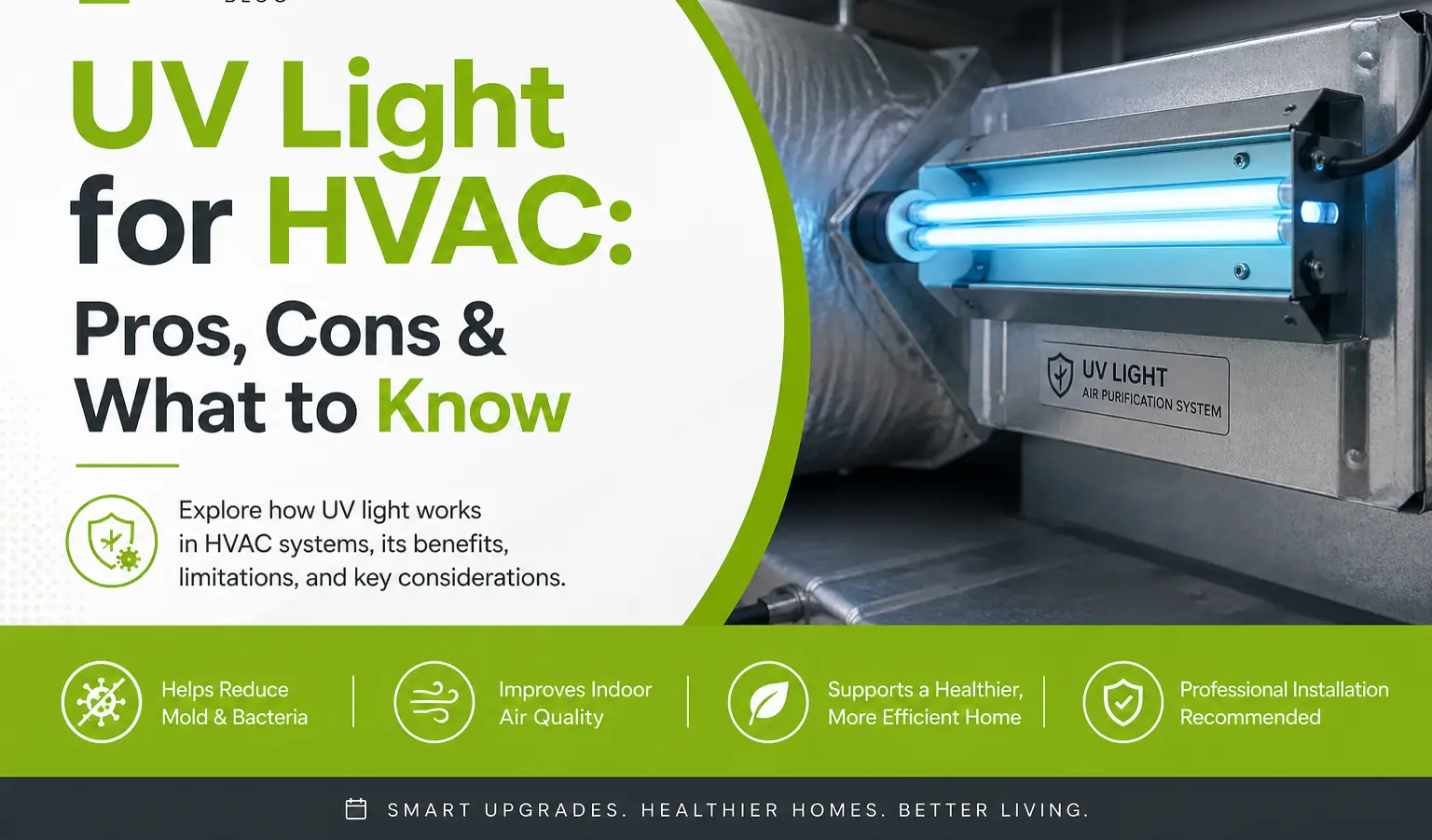

Many homeowners exploring ways to improve indoor air quality come across uv light for hvac pros and cons. It sounds like a high-tech solution, but does it actually work? And is it worth the investment?
Before spending money on upgrades like hvac uv lights, it is important to understand how they compare to other solutions like duct cleaning. Many homeowners first explore DIY approaches such as duct cleaning methods, but quickly realize deeper issues require more advanced solutions.
This guide breaks down how ultraviolet light for air conditioner systems works, the real benefits, the drawbacks, and when professional installation makes the most sense.
Why UV Light in Air Conditioning Matters for Indoor Air Quality
Your hvac system circulates air throughout your home multiple times a day. If contaminants like mold, bacteria, or allergens exist inside the system, they continuously spread into your living space. This is why improving air quality inside the system itself matters just as much as filtering air at the vents.
Air conditioner ultraviolet light technology targets microorganisms at the source. Installed near the evaporator coil or inside ducts, these uvc lights disrupt the DNA of mold and bacteria. According to research from the EPA Indoor Air Quality Guide, controlling biological growth inside HVAC systems plays a critical role in improving indoor environments.
Discussions on platforms like Reddit and Quora show mixed uv light reviews. Some homeowners report noticeable odor reduction, while others see minimal impact. The difference usually comes down to installation quality and whether the system addresses the root cause.
Main Practical Fixes Using UV Light HVAC System
When properly installed, a uv light hvac system can target specific problem areas inside your system. It is not a one-size-fits-all solution, but it works best when combined with other maintenance steps.
There are different types of uv lights used in HVAC systems, each designed for a specific purpose. Understanding these options helps homeowners choose the right setup.
- Coil sterilization lights placed near the evaporator coil to prevent mold growth
- Air sterilization lights installed in ducts to treat moving air
- Hybrid systems combining both approaches for broader coverage
These systems enhance existing air filters but do not replace them. According to NIH research, UV systems are most effective when paired with proper filtration and airflow management.
Installing UV Lights in Your HVAC System
Installing uv lights is not a simple plug-and-play task. It requires proper positioning, electrical integration, and safety shielding. A qualified hvac technician ensures the uv light system is installed where it delivers maximum exposure without damaging components or causing safety issues.
Fast Solutions vs Long-Term Benefits of UV Lights for Air Conditioning Systems
Some homeowners expect instant results after installing uv lights for air conditioning systems. While odor reduction can happen quickly, deeper improvements in indoor air quality take time.
Short-term benefits often include reduced musty smells and cleaner coils. Over the long term, systems may operate more efficiently due to less buildup on components. However, the impact varies depending on existing conditions like duct cleanliness and humidity levels.
Wikipedia explains that ultraviolet light is highly effective at killing microorganisms, but only when exposure time and intensity are sufficient. That is why placement inside the hvac system is critical.
System Improvements Beyond UV Light HVAC
While uv light hvac solutions are helpful, they work best as part of a complete indoor air strategy. If your system has dust buildup, airflow issues, or moisture problems, UV lights alone will not fix everything.
For example, dirty ducts can continue circulating particles even if bacteria are neutralized. This is why combining UV systems with services like air quality upgrades provides better results.
- Seal duct leaks to prevent contamination
- Improve airflow balance for better circulation
- Control humidity to reduce mold growth
- Maintain clean coils and components
Homeowners often overlook these foundational improvements and rely too heavily on uv lamp benefits alone, which limits effectiveness.
DIY vs Professional Installation of UV Light for HVAC Unit
DIY kits for uv light for hvac unit installation are widely available. However, they often fail due to incorrect placement, poor wiring, or lack of system knowledge. Installing lights too far from the evaporator coil reduces effectiveness significantly.
Professional installation ensures correct positioning, electrical safety, and compliance with safety standards. It also reduces risks related to potential safety concerns such as UV exposure or system damage.
| Factor | DIY Installation | Professional Installation |
| Placement Accuracy | Often incorrect | Optimized for performance |
| Safety | Higher risk | Controlled and compliant |
| Effectiveness | Limited | Maximum output |
| Long Term Value | Lower | Higher efficiency |
Signs You Need a UV Light System in Your HVAC
Not every home needs a uv light system, but certain conditions make it highly beneficial. If your system struggles with biological contaminants, UV solutions can provide targeted support.
Homes with persistent moisture, allergies, or musty odors benefit the most. If you notice visible mold near vents or frequent illness, your system may need deeper cleaning and sterilization.
- Musty or moldy smells from vents
- Frequent allergy symptoms indoors
- Visible mold near ducts or coils
- High humidity levels in home
In many cases, combining UV lights with services like mold removal delivers better long-term results.
Why Choose Professional HVAC Services
Installing uv lights without addressing underlying issues often leads to disappointment. Professional inspection identifies whether UV technology is the right solution or if other repairs are needed first.
Experienced technicians evaluate airflow, duct condition, and moisture levels before recommending a solution. This ensures homeowners get real value instead of unnecessary upgrades.
Trusted companies like Air n Fires focus on complete system performance, not just quick fixes. This approach helps homeowners achieve better air quality and system efficiency.
FAQs About UV Light HVAC System
Do hvac uv lights really improve air quality?
Yes, but mainly by reducing biological contaminants like mold and bacteria. They do not remove dust or allergens, so combining them with filtration and duct cleaning provides better results.
Are there any pros and cons of uv light in hvac systems?
Yes. Benefits include cleaner coils and reduced microbes. Drawbacks include upfront cost, ongoing bulb replacements, and limited impact if the system has other issues.
How long do uv lights last in HVAC systems?
Most UV bulbs last 9 to 12 months. Regular replacement is necessary to maintain effectiveness, as output decreases over time even if the light still appears functional.
Is uv light in air conditioning safe?
Yes when installed properly. Professional installation prevents exposure risks and ensures the system operates safely without damaging components or affecting occupants.
Do uv lights for air conditioning systems reduce energy costs?
Indirectly, yes. By keeping coils cleaner, they can improve efficiency. However, savings depend on overall system condition and maintenance practices.
What is the upfront cost of a UV HVAC system?
Costs vary depending on system size and type. Basic installations start a few hundred dollars, while advanced systems cost more with installation included.
Can I install a uv light hvac system myself?
It is possible but not recommended. Incorrect installation reduces effectiveness and may create safety risks. Professional installation ensures proper performance and reliability.
Take the Next Step Toward Cleaner Indoor Air
If you are considering uv light for hvac pros and cons, the best decision starts with a professional system evaluation. Not every home needs UV lights, but when used correctly, they can significantly improve system hygiene and performance.
Instead of guessing, get expert guidance and ensure your investment delivers real results. Visit Air n Fires to schedule an inspection and find out what your HVAC system truly needs.