
For all homeowners in Texas, Air N Fire comes in as a pleasant surprise for various kinds of fireplace cleaning requirements. If you are wondering how to clean the fireplace in your home, you must also identify which fireplace you have.
Are you looking for a fireplace cleaning guide for wood fireplace cleaning? If yes, you have come to the right place. If you have a gas fireplace cleaning query, here is all you need to know. However, we cannot ignore homeowners who seek pellet fireplace cleaning solutions. This guide will help all of you in finding the safest maintenance service in the state.
People living in Texas know that the climate requires the use of fireplaces, but the dust storms and dryness cause dirt build-up in chimneys. Safety is the foremost concern, and that is why Air N Fire cleaning services fit the bill. We will discuss wood fireplace cleaning, gas fireplace cleaning, electric fireplace cleaning, pellet fireplace cleaning and why this service provider is a good choice.
Why Regular Cleaning Is Essential for Every Fireplace Type?
Fireplace maintenance is of utmost importance because if not clean, the chimney and fireplace can catch fire, and the build-up compromises the air quality. You may have seen old, dusty fireplaces with creosote build-up or gas emissions or even dust buildup in case there is an electric fireplace. Ash residue causes the room to smell, and it becomes hard to breathe if you sit there long enough. Additionally, there is no fire safety.
No matter what kind of fireplace you have at home, it is essential to clean it regularly to reduce indoor air pollution, ensure safety of your family and home and restore respiratory health. Fireplace cleaning importance and fire safety should be known to all homeowners so they can ensure fireplace maintenance on time for the best indoor air quality. To prevent chimney fires, fireplace safety measures in time are vital. For more on why maintenance matters, check Benefits of Fireplace Cleaning.
What Is Creosote and Why Is It Dan gerous?
Creosote is a flammable tar-like substance formed by burning wood smoke. It is a dark, oily substance that can accumulate to 1/8 inch thick after 10 fires. Creosote buildup is one of the primary reasons for chimney fire risk, and soot accumulation causes respiratory issues. Due to these reasons, creosote buildup and tar deposits are dangerous for your home and family.
Creosote’s chemical properties make it an unhealthy substance around people. When you light a fire, the fumes from the heated creosote are unhealthy for those in the room. Moreover, fire hazards are always a possibility with creosote.
Health Risks of Neglected Fireplace Cleaning
Neglecting fireplace cleaning exposes occupants to harmful smoke and carbon monoxide. Smoke inhalation risks due to carbon monoxide poisoning make fireplace cleaning an essential maintenance task. Moreover, overall respiratory health can be impacted negatively if the fireplace is not clean.
There can be several short-term and long-term health risks of neglected fireplace cleaning. Even if you have a gas fireplace or electric fireplace, the burning of dust and gas can cause respiratory issues. The American Lung Association study on wood burning shows that emissions from wood smoke can cause coughing, wheezing, asthma attacks, heart attacks, and premature death, among other health effects.
How to Know When Your Fireplace Needs Cleaning?
You need to clean your fireplace when you notice these four signs.
- Creosote flakes: One of the most prominent fireplace cleaning signs is the deposition of creosote flakes. When the fireplace is hot, you can see creosote drop down from the chimney, which means that the deposit along the shaft is enough to clean.
- Smoky odor: If the room smells smoky, even when the fireplace is not in use, it means that it is time to get the fireplace cleaned.
- Poor draft: A poor draft with a smoky odor is one of the fire risk indicators. If you feel that the air is heavy and full of carbon, it is time to get a thorough cleaning done.
- Soot buildup: Soot buildup is a dangerous sign because visible soot means that the chimney and the fireplace are densely blocked. You will need to clean the fireplace to ensure a healthier home environment.
For professional inspection or help detecting buildup, explore fireplace inspection services in Plano.
How to Know When Your Wood Fireplace Needs Cleaning?
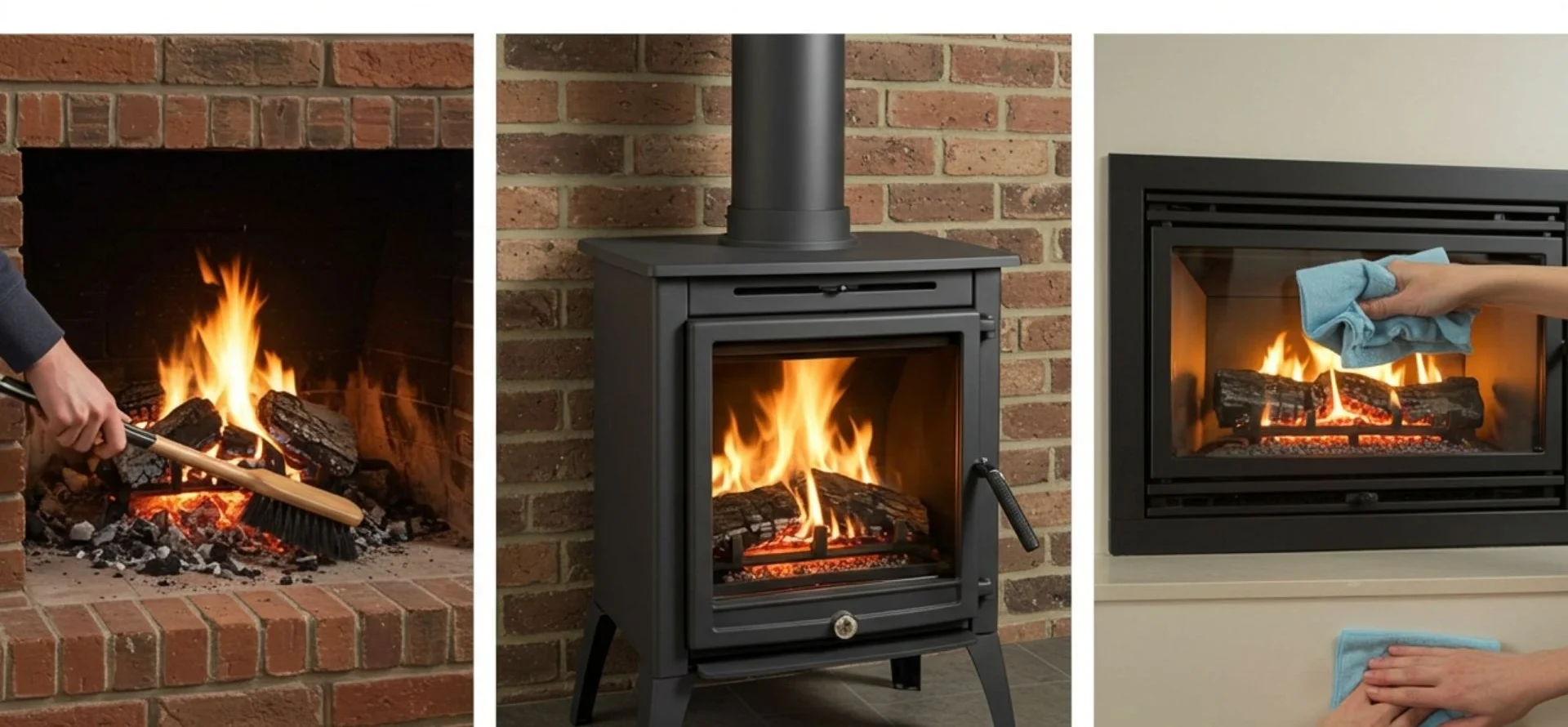
Natural firewood gives off a lot of fumes, and the creosote buildup and soot from the burnt wood can become stubborn deposits around the fireplace. If you were wondering how to clean a wood fireplace, you are in the right place because the method we share will not require a chimney cleaner!
- Creosote Removal: Begin by brushing the chimney walls and fireplace to remove any dust and loose dirt from the surface. Homeowners can clean a wood fireplace for creosote removal by cleansing the inside of the chimney with hot water and soap. However, before you apply this mixture, clean off the walls to eliminate loose dirt.
- Use a Chimney Brush: Using a hard-bristle brush or broom can be useful to remove the creosote. You can purchase a good chimney brush with a strong detergent to dissolve the greasy creosote and ash cleanup.
Wood fireplace burning requires deep cleansing routines to remove the thick tar and grease. Make sure you use good quality detergent and brush. Wipe off the chimney walls and fireplace with a dry cloth, and once the fireplace is dry, you can start using it. - Detergent for Creosote Removal: Many homeowners use cleaning sprays and grease sprays to clean the chimney, but that would not work. Moreover, these sprays may contain alcohol or chemicals that can catch fire if the fumes are high when you use the fireplace. A good quality detergent will work perfectly for you.
- Multiple Cleansing: Creosote and tar buildup can settle between bricks in the chimney, and it means that you would need a thorough cleaning routine. Regular cleaning will work wonders as you will not have to consume a lot of time, but the cleansing technique will have to be the same.
If you are cleaning a wood fireplace after a long time, ensure that you clean the chimney and fireplace below more than once with detergent and a chimney brush. The thick layers of creosote and tar can take multiple washes to come off, and you must ensure that the chimney is absolutely empty and clean before you light it again.
Step-by-Step Guide-Gas & Electric Fireplace Cleaning
Regular cleaning of gas and electric fireplaces is essential to maintain safety, efficiency, and indoor air quality. Dust buildup, soot residue, and blocked vents can affect performance and create odors. A structured cleaning process helps extend the lifespan of the unit while ensuring safe operation throughout the heating season.
Step 1: Power Off, Cool Down, and Safety Preparation
Before beginning the cleaning process, completely shut down the fireplace and allow it to cool. Turn off the gas supply at the valve for gas fireplaces, and unplug electric fireplaces from the power outlet to eliminate electrical risks. Wear protective gloves and a dust mask to avoid contact with dust and residue, and place a drop cloth around the area to protect floors and furniture.
Step 2: Remove and Clean the Glass Panel
Gas fireplace glass panels should be carefully removed following the manufacturer’s instructions. Clean the glass using a fireplace-approved glass cleaner to remove soot, smoke stains, and fingerprints without scratching the surface. For electric fireplaces, gently wipe the glass front with a microfiber cloth to clear dust and maintain clear visibility of the flame display.
Step 3: Clean Logs, Burners, and Interior Surfaces
Artificial gas logs and burner assemblies should be cleaned gently using a soft brush or vacuum attachment to remove dust and soot buildup. Avoid repositioning the logs, as incorrect placement can affect flame quality and safety. For electric fireplaces, wipe interior panels and decorative elements to remove dust that may cause odors when the heater is operating.
Step 4: Inspect and Clean Vent Openings
Proper airflow is critical for both gas and electric fireplaces. Inspect vent openings for dust, debris, or blockages that may restrict airflow. Use a vacuum or soft brush to clean the vents thoroughly. Keeping vents clear helps improve efficiency, prevents overheating, and ensures safe exhaust or air circulation.
Step 5: Clean Fans and Airflow Components
Electric fireplaces often include internal fans that circulate warm air and can accumulate dust over time. Carefully vacuum or wipe fan areas and airflow channels using dry tools only. Avoid moisture near electrical components, as water can damage wiring and fan motors, leading to performance issues or safety concerns.
Step 6: Check Controls, Connections, and Surrounding Areas
Wipe down control knobs, switches, and surrounding trim to remove dust and residue. For gas fireplaces, visually inspect connections for signs of wear or damage. Electric units should be checked for loose cords or exposed wiring. This step helps identify minor issues before they turn into costly repairs.
Step 7: Reassemble, Restore Power, and Perform a Final Test
After cleaning is complete, reassemble all components and restore the gas supply or electrical connection. Turn the fireplace on briefly to ensure proper flame appearance, heating performance, and airflow. A final inspection confirms that the fireplace is clean, safe, and ready for regular use.
When to Hire a Professional for Fireplace Cleaning and Inspection?
Professional cleaning is recommended annually or if heavy buildup, damage, or unusual odors are present. If you live in Texas, you would need professional fireplace cleaning annually since the use of it is enough for the fireplace to get dirty.
Chimney inspection by certified chimney sweeps will be a good decision to understand how frequently your fireplace will require cleaning. Professional fireplace cleaning will help all homeowners who want to ensure a healthy environment at home.
If you’re based near Prosper, contact chimney sweep in Prosper for expert help. You can experience the following benefits from professional fireplace cleaning:
- A healthier environment at home.
- A cleaner fireplace ensures less use of energy and fuel.
- Better air quality and zero-smoke means paint and furniture stay safe from soot deposits.
Typical Cost of Professional Fireplace Cleaning in Texas
Costs of professional fireplace cleaning in Texas can typically range from $150 to $350, depending on fireplace type and condition. Fireplace cleaning costs in Texas are more economical than in several other states. To estimate expenses for installation or replacements, check Fireplace Installation and Replacement Cost.
Here is a comparison of wood, gas/electric and pellet fireplace cleaning costs in Texas:
| Service | Average Cost | Frequency |
|---|---|---|
| Wood Fireplace Cleaning | $150 – $400 | Annually |
| Electric Fireplace Cleaning | $125 – $200 | Every 2–3 Months |
| Chimney Cleaning | $175 – $350 | Annually |
| Chimney Inspection | $100 – $250 | Once Per Year |
Additional Fireplace Maintenance Tips for Texas Homeowners
Fireplace maintenance is a part of home maintenance, and all Texas homeowners must ensure regular clean-ups to avoid any creosote or soot buildup that may cause respiratory issues.
Moreover, a cleaner chimney will ensure that the air quality inside the house is good. We are sharing some fireplace maintenance tips for seasonal fireplace care and pest prevention. These tips will help keep your fireplace safe and efficient all year round.
- Get a quarterly chimney inspection to see if there are any nests or rodents in the chimney shaft.
- Get a professional cleaner to come and clean the fireplace in depth to avoid any old soot deposits from solidifying and staining the fireplace.
- Ensure that before and after seasonal use, you get the fireplace cleaned.
- Use good quality wood that will burn completely and last longer to avoid a lot of creosote and tar buildup.
- Get a chimney cap for your home to prevent any pests from finding their way inside.
- Fire season in Texas spreads over months, and if you are in Dallas or nearby cities, you may be using a fireplace more regularly. Ensure that you do not use dusty or wet wood, as that would cause more smoke.
- During the colder months, review Prepare Your Fireplace for Winter for seasonal care.
Frequently Asked Questions About Fireplace Cleaning