
Repair aging air ducts when the damage is limited to a few leaks, loose joints, or small holes. Replace them when the ductwork is widespread with rust, crushed sections, or persistent poor airflow across the whole home. The right choice depends on the duct material, age, and how much of the system is affected.
This guide explains the warning signs of aging air ducts, how to tell repair from replacement, and what the decision typically costs for homeowners in Plano. You will also learn how aging ducts affect indoor air quality and HVAC performance over time.
What Are Aging Air Ducts?
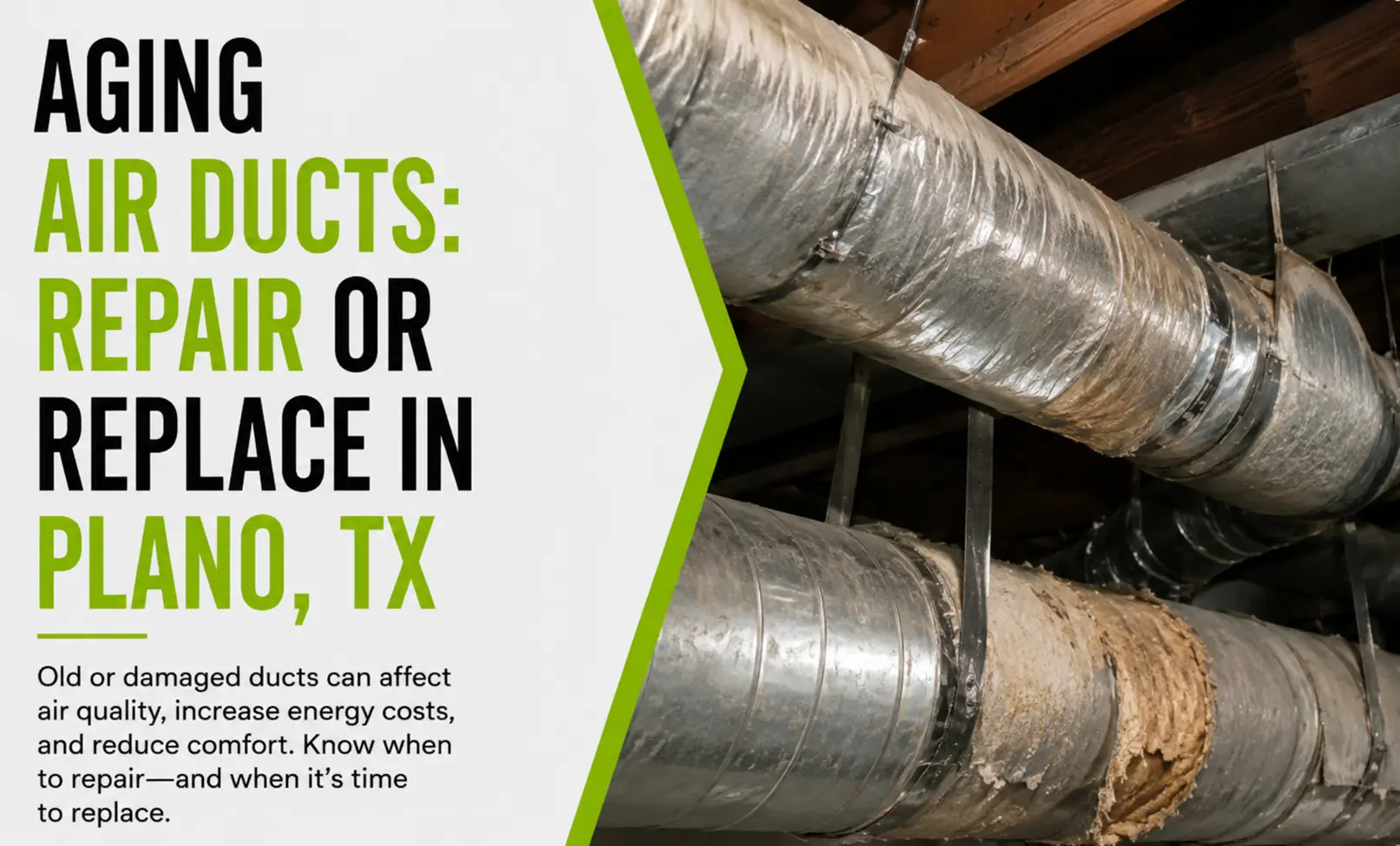
Aging air ducts are ductwork sections that have degraded from years of use, temperature cycling, and normal wear, often losing their seal integrity or physical structure over time. Sheet metal ducts can rust and separate at the seams, while flexible air duct sections can sag, crush, or develop tears in the outer liner. Homeowners noticing warning signs can review this guide on signs your air ducts need cleaning to understand the difference between a dirty duct and one that is actually failing structurally.
Ductwork does not fail all at once. Small leaks and loose connections build up gradually, which is why many homeowners do not notice a problem until airflow or comfort issues become obvious.
Why Does the Repair vs Replace Decision Matter?
The repair vs replace decision matters because choosing wrong wastes money either way. Repairing severely damaged ductwork throws money at a system that will keep failing, while replacing minor damage costs far more than necessary.
Aging ducts also affect more than comfort. Leaky or damaged ductwork lets conditioned air escape into attics or crawl spaces, which forces your HVAC equipment to work harder. Reviewing how poor airflow can damage your HVAC system explains how this extra strain shortens equipment lifespan over time.
In Plano, older homes built before modern duct sealing standards are especially prone to this kind of gradual air duct degradation, particularly in attics exposed to extreme summer heat.
Signs of Aging Air Ducts
Certain warning signs point clearly toward aging or failing ductwork instead of a simple cleaning issue.
- Uneven temperatures between rooms
- Rising energy bills without a change in usage
- Musty odor coming from vents
- Visible rust, dents, or crushed sections on accessible ductwork
- Weak airflow at multiple vents throughout the home
- Increased dust buildup around vents shortly after cleaning
Homeowners noticing several of these signs at once should review common duct repair problems to get a clearer sense of whether the issue is isolated or spread throughout the system.
How to Decide Between Repair and Replacement
Comparing repair and replacement side by side makes the decision much clearer for most homeowners.
| Factor | Repair Makes Sense | Replacement Makes Sense |
| Damage extent | Limited to one or two sections | Widespread across the system |
| Duct age | Under fifteen years old | Fifteen to twenty years or older |
| Airflow issues | Isolated to specific rooms | Poor airflow throughout the home |
| Air quality concerns | No mold or persistent odor | Mold spores or ongoing musty smell |
For homeowners weighing the two options, reviewing when to replace your air ducts offers a more detailed breakdown of the specific thresholds that usually tip the decision toward full replacement.
Benefits of Fixing Aging Air Duct Problems Early
Addressing aging ductwork before it fully fails protects both your comfort and your budget.
- Improves indoor air quality by reducing dust buildup and mold spores
- Restores even airflow and consistent room temperatures
- Reduces strain on HVAC equipment, extending its lifespan
- Lowers energy bills by eliminating conditioned air leaks
- Prevents small leaks from turning into full section failures
Early action almost always costs less than waiting until the ductwork fails completely across the whole home.
Common Mistakes When Dealing with Aging Air Ducts
The most common mistake is assuming dirty ducts and failing ducts are the same problem. Cleaning restores airflow temporarily but does nothing to fix structural damage or leaks.
Another mistake is ignoring ductwork entirely because the air conditioner itself still seems to run fine. The cooling equipment can work correctly while the duct system leaks air, wastes energy, and delivers poor airflow to different rooms.
Some homeowners also delay repairs hoping a problem will stay isolated. Small leaks and loose joints tend to worsen with continued temperature cycling, especially through hot Texas summers.
Cost Factors for Repairing or Replacing Aging Air Ducts
Repair or replacement cost depends on duct material, how much of the system needs work, and accessibility within the home.
Sealing a few joints costs far less than replacing an entire duct run. For a clearer picture of pricing, this breakdown of air duct cleaning costs in Texas gives homeowners a useful reference point for related service pricing.
How to Choose the Right Air Duct Company
Choose a duct company that inspects before recommending a fix and explains exactly what is driving the repair versus replace decision.
A trustworthy company should also explain how the air duct cleaning process fits into the bigger picture, since cleaning and repair often go hand in hand during a full inspection.
Homeowners comparing companies often check community discussions for honest opinions, such as this air ducts thread where homeowners share what tipped their decision one way or the other.
Air N Fire inspects the full duct system before recommending repair or replacement, so Plano homeowners get an honest answer based on actual condition, not guesswork.
Frequently Asked Questions
How do I know if my air ducts need to be replaced?
Widespread rust, crushed sections, persistent poor airflow, and mold spores throughout the ductwork all point toward replacement. Isolated leaks or minor damage in one or two sections can usually be repaired instead.
How long do air ducts typically last?
Most air ducts last fifteen to twenty five years, depending on material and installation quality. Sheet metal ducts tend to outlast flexible duct sections, especially in attics exposed to extreme heat.
Can old air ducts affect indoor air quality?
Yes. Aging ducts with leaks or damage let dust, mold spores, and outside air into the system, which lowers indoor air quality. Sealing or replacing damaged sections helps restore cleaner air throughout the home.
Is it cheaper to repair or replace air ducts?
Repair is almost always cheaper upfront, but only makes sense when damage is limited. Widespread damage often costs more to repeatedly repair than to replace the ductwork once and stop the ongoing issues.
How often should air ducts be inspected?
Most homeowners benefit from a duct inspection every two to three years, or sooner if they notice uneven temperatures, rising energy bills, or a musty odor. Older homes may need more frequent checks.
Does duct age alone mean I need a replacement?
Not always. Age is one factor, but actual condition matters more. A well maintained older duct system can still function properly, while a younger system with major damage may need earlier replacement.
Conclusion
Deciding between repair and replacement for aging air ducts comes down to how widespread the damage is and how it affects airflow and air quality. Small, isolated issues usually call for repair, while widespread damage points toward replacement. Contact Air N Fire to schedule a duct inspection and get a clear, honest recommendation for your Plano home.