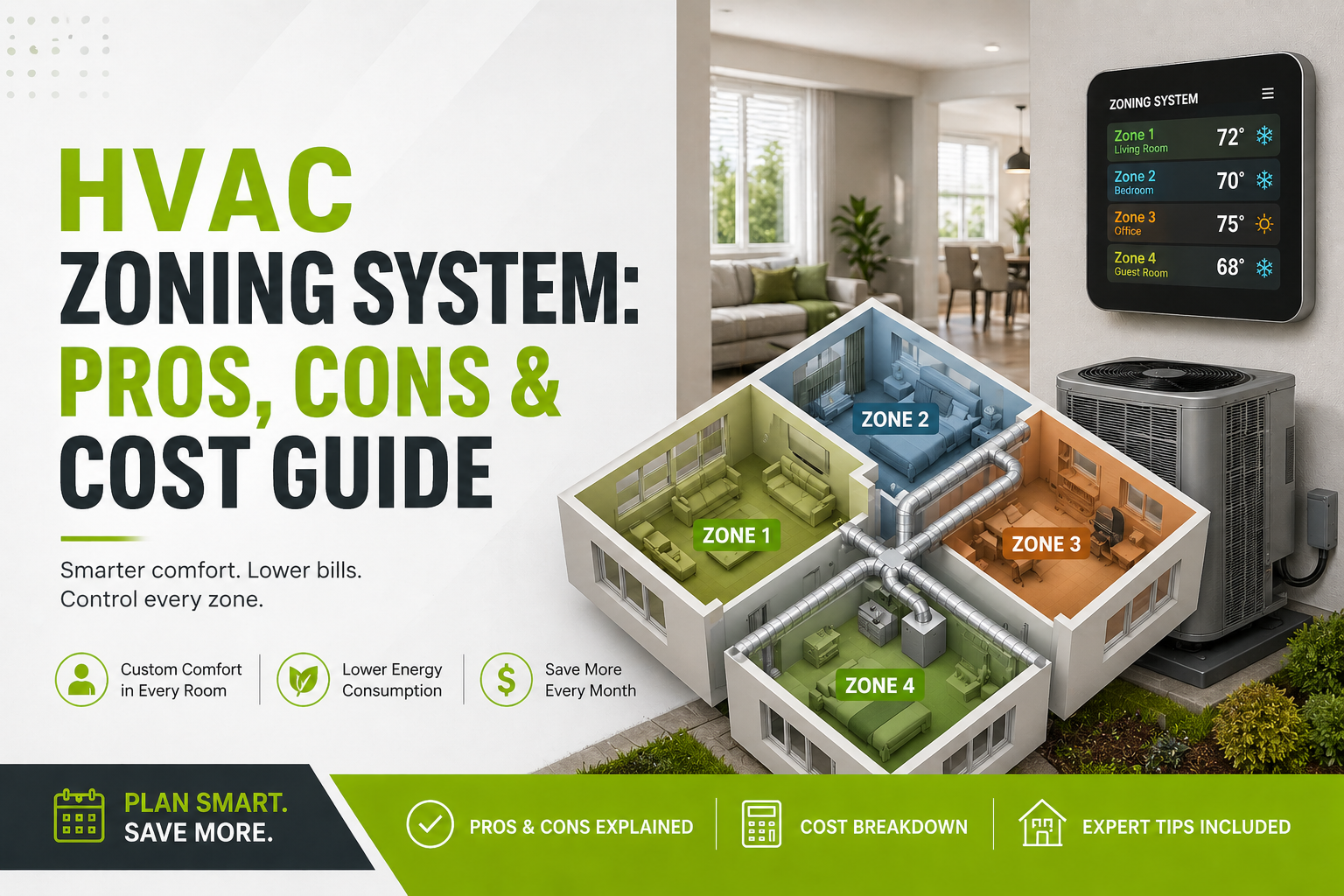

If you are dealing with uneven temperatures in your home, rising utility bills, or rooms that never feel right, you have probably considered an HVAC zoning system. Understanding HVAC zoning system pros and cons helps you decide if it is a smart upgrade or an unnecessary expense. Many homeowners are surprised to learn that a single thermostat often wastes energy by treating the entire home as one space instead of managing individual rooms or zones.
A properly designed zoned HVAC setup can personalize comfort, improve energy efficiency, and extend system life. But installation is not always simple, and DIY attempts often fail due to airflow imbalance and incorrect damper placement. Before making a decision, it is important to understand how zoning works, what it costs, and when you need a professional. You can also explore ways to improve air quality alongside zoning upgrades for better overall performance.
What Is an HVAC Zoning System and How Does It Work?
A hvac zoning system divides your home into multiple hvac zones, each controlled independently through a control panel or zone control panel. Instead of one single thermostat, you have multiple thermostats that regulate heating and cooling in different areas. Dampers installed in the ductwork open and close to direct conditioned air where it is needed most, improving comfort and reducing energy waste.
This system works especially well in multi-level homes, large houses, or properties with varying sun exposure. For example, upstairs areas tend to stay warmer, while basements remain cooler. A multi zone hvac system adjusts airflow automatically, reducing strain on your hvac system. According to the EPA thermostat guide, better temperature control can significantly improve energy usage and comfort.
Key Benefits of HVAC Zoning Systems
The biggest advantage of hvac zoning systems is the ability to personalize comfort across your entire living space. Instead of heating or cooling unused areas like guest rooms, zoning allows you to focus only on occupied zones. This reduces wasted energy and gives each family member control over their preferred temperature.
Another major benefit is improved energy efficiency and reduced system strain. By limiting unnecessary airflow, zoning minimizes wear and tear on components like blowers and compressors. Studies from Lawrence Berkeley National Laboratory highlight how targeted climate control can cut energy consumption significantly in residential systems.
- Reduce energy consumption by heating only occupied areas
- Improve climate control in difficult spaces
- Lower utility bills over time
- Enhance comfort in multi-level homes
- Extend lifespan of your hvac system
Common Drawbacks You Should Know
While the benefits are strong, there are real downsides to consider. The initial cost of hvac zoning system installation can be high, especially if your ductwork needs modification. Older systems may not support zoning without major upgrades, and improper installation can lead to airflow problems and pressure imbalances.
Another issue is system complexity. Adding dampers, thermostats, and a zone control panel increases the number of components that can fail. DIY installations often result in uneven airflow or short cycling, which can damage the system over time. The ASHRAE residential guidelines emphasize proper system design to avoid performance issues and inefficiencies.
- High upfront installation cost
- Complex setup requiring expert design
- Risk of airflow imbalance
- Maintenance may be more involved
- Not ideal for all home layouts
Cost Breakdown of a Zoned HVAC System
The cost of a zoning hvac system depends on the number of zones, home size, and system type. On average, homeowners can expect to pay between $2,000 and $7,500 for a full installation. This includes dampers, thermostats, wiring, and the control panel. If your system requires upgrades like a new heat pump, costs can increase significantly.
Labor is a major factor in pricing. Installing dampers inside existing ducts requires precision and experience. Trying to cut costs with DIY methods often leads to poor performance or system damage. If your ductwork already has issues, it is smart to consider duct repair before installing zoning to avoid inefficiencies and future expenses.
Is HVAC Zoning Worth It for Your Home?
Zoning makes the most sense in homes with temperature inconsistencies or large layouts. If you have hot upstairs rooms, unused areas, or different comfort preferences among family members, a best residential hvac zoning system can dramatically improve comfort. It is also ideal for homes with additions that were not originally designed into the system.
However, smaller homes or open floor plans may not benefit as much. In these cases, a properly balanced system may be enough. If your ducts are dirty or airflow is restricted, zoning alone will not fix the problem. Start with duct signs to ensure your system is operating efficiently before considering zoning.
Signs Professional HVAC Zoning Installation Is Needed
There are clear signs that installing an hvac zoning system requires professional help. If your home has uneven temperatures, frequent system cycling, or high energy costs, these issues often point to deeper airflow problems. Attempting to install zoning without diagnosing these issues can make things worse.
DIY zoning fails because it ignores system design factors like duct size, airflow resistance, and equipment capacity. A qualified hvac contractor ensures proper damper placement, correct thermostat calibration, and balanced airflow. If your system already struggles, consider a professional duct check before adding zoning components.
- Hot and cold spots throughout the home
- Rooms that never reach desired temperature
- High energy bills without clear reason
- Noisy airflow or pressure issues
- Frequent HVAC cycling
Why Choose a Professional Service for HVAC Zoning
Choosing the right professionals ensures your zoning system performs as expected. A trained technician evaluates your home layout, duct system, and equipment compatibility before designing a zoning plan. This prevents airflow issues and ensures each zone receives the right amount of conditioned air.
Professional installation also protects your investment. Poorly installed zoning systems often lead to breakdowns and increased wear and tear. Experienced technicians use proper tools, advanced diagnostics, and proven techniques to deliver reliable results. This is especially important when dealing with complex systems like a multi zone hvac system.
FAQs About HVAC Zoning Systems
What are HVAC zoning system pros and cons?
HVAC zoning system pros and cons include better comfort and energy savings versus higher installation costs and complexity. Zoning improves temperature control but requires professional setup to avoid airflow issues and system strain.
How many zones should a home have?
Most homes benefit from two to four zones depending on size and layout. Larger homes or multi-level properties may need more zones to maintain consistent heating and cooling across all areas.
Can I add zoning to an existing HVAC system?
Yes, many systems can be upgraded with zoning, but it depends on duct design and system capacity. A professional evaluation is necessary to ensure compatibility and prevent performance issues.
Does zoning reduce energy bills?
Zoning can significantly reduce energy usage by avoiding unnecessary heating or cooling. By targeting specific rooms or zones, homeowners often see lower monthly utility costs.
Is zoning good for multi-level homes?
Yes, zoning is ideal for multi-level homes because it addresses natural temperature differences between floors. It helps maintain consistent comfort without overworking the system.
What is the lifespan of a zoning system?
A zoning system typically lasts as long as your HVAC unit when properly installed and maintained. Regular inspections and maintenance help extend its lifespan and ensure reliable performance.
Conclusion
Understanding HVAC zoning system pros and cons helps you make a smart decision based on your home’s layout, comfort needs, and budget. While zoning offers clear benefits like improved energy efficiency and customized comfort, it requires careful design and professional installation to work properly. Poor DIY attempts often lead to costly problems and reduced performance.
If your home struggles with uneven temperatures or rising energy costs, it may be time to explore zoning with a trusted expert. A properly installed system can transform how your home feels every day. Learn more or schedule a service at Air N Fire and take the next step toward better comfort and efficiency.